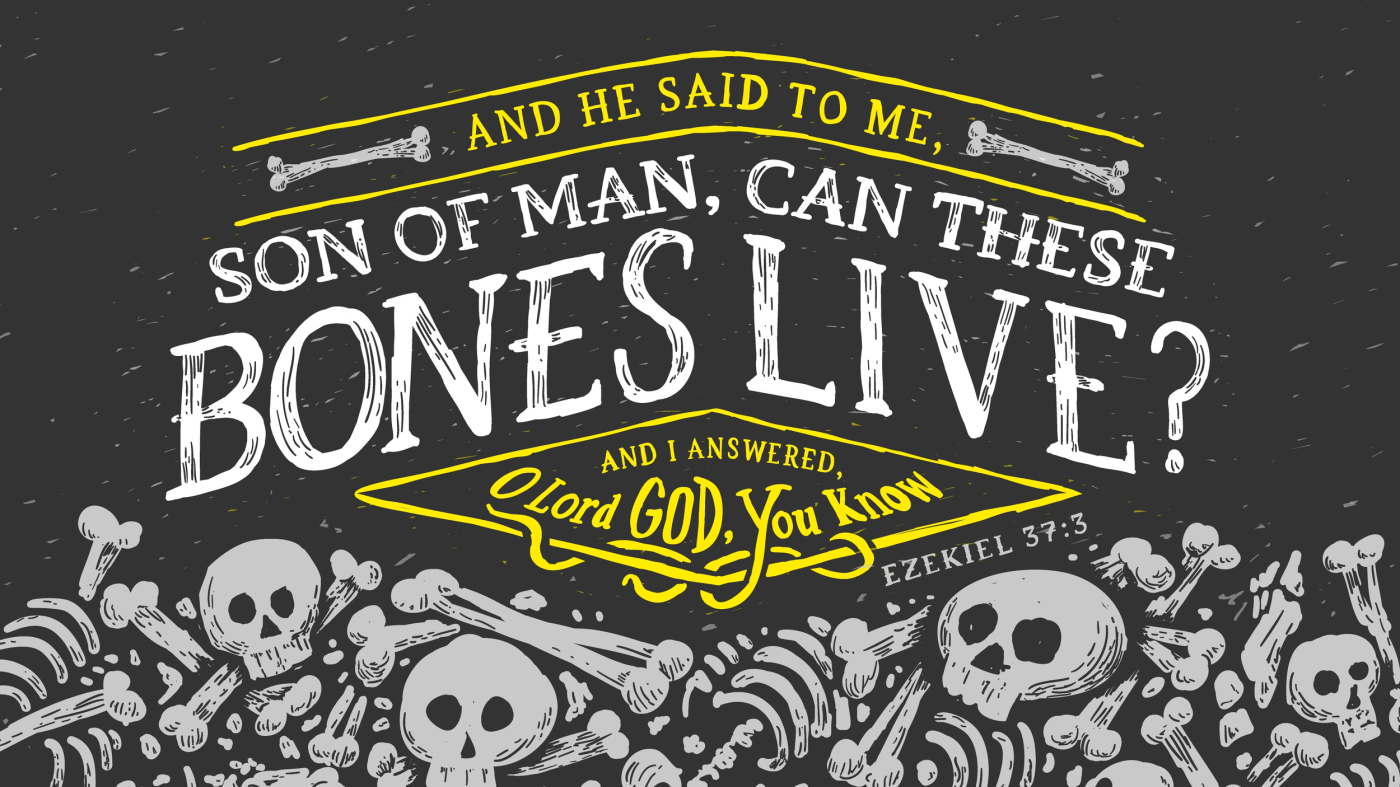
Can you imagine what might have been going through the mind of the prophet Ezekiel in this reading? God brings him out to a valley which is full of dry bones. They walk around among the bones, and then God asks Ezekiel: ‘Can these bones live?’
How would you answer? Ezekiel’s reply, ‘Sovereign Lord, you alone know’ (v3 NIV), might have been a polite way of saying, ‘God knows!’ to the almighty Lord of heaven and earth. Do you think that was his honest answer, or was he thinking something less polite? If you were Ezekiel, and God asked you whether the bones could live, how would you answer?
From verse 11, God explains that his question isn’t just about the resurrection of the dead. God tells Ezekiel that the bones represent the people of the nation of Israel. At this stage in their history, the Jews were a conquered people. They had been defeated by foreign armies which had invaded their land and destroyed their cities, including the capital Jerusalem and its holy temple, which was the heart and soul of their nation. The leaders of the people had been taken away to exile and were disconnected from their homeland, their families and their culture. All of this had left them spiritually dry as they mourned their losses and waited for God to rescue them. They were a people who felt like they had no hope.
And God still asks the question, ‘Can these bones live?’
We haven’t had invading armies destroying our homes and cities, and we might not have been forced into exile in a foreign country, but we can still find similarities between our lives and those of God’s people at the time of Ezekiel. We all have our battles in life, and we can often feel defeated by the things we struggle with or against. We can feel disconnected from the people or things that are important to us, from God, or even within ourselves. We can feel spiritually dry as we go through daily life, trying to live up to demands and expectations, or just trying to get through each day the best we can. When we feel defeated, disconnected, or dry in our lives, just like the bones or God’s people in the story, hope can be hard to find.
And then God turns up to ask us, ‘Can these bones live?’
At that point in the reading, God speaks a word of promise through Ezekiel. We read,
This is what the Sovereign Lord says to these bones: I will make breath enter you, and you will come to life. I will attach tendons to you and make flesh come upon you and cover you with skin.
Just in case we missed it the first time, God then repeats his promise: ‘I will put breath in you, and you will come to life. Then you will know that I am the Lord’ (vv5,6 NIV).
The Hebrew word God uses at this point is ruah which means breath, wind and spirit. When God promises to put his ruah in these bones, he is promising to breathe his Spirit in them to give them life.
This is the same Breath which hovered over the waters of chaos at the beginning of creation (Genesis 1:2). It is the same Breath that God gave to the 70 Israelite elders who prophesied in the wilderness (Numbers 11:24,25), to the Judges Gideon (Judges 6:34), Jephthah (Judges 11:29), and Samson (Judges 13:25; 14:6,19; 15:14), to David (1 Samuel 16:13) and to the Old Testament prophets. This is the same Breath that descended on Jesus in the form of a dove at his baptism (Matthew 3:16 etc), which he committed into his Father’s hands as he died on the cross (Luke 23:46), and which he gave to his disciples on the evening of the resurrection when he breathed on them (John 20:22). This same Breath gave the disciples the ability to speak the good news of Jesus to people from many nations in their own languages at Pentecost (Acts 2:4), and then led and empowered the Apostles throughout the early days of the Christian movement in Acts. This Holy Breath of God brings about our adoption as God’s children (Romans 8:15), gives us power, love and self-control (2 Timothy 1:7), and produces the fruit of love, joy, peace, patience, kindness, goodness, faithfulness, gentleness, and self-control in our lives (Galatians 5:22,23).
The is the same Breath of Life which God breathes into us through the good news of Jesus. God instructed Ezekiel to prophesy to the bones, telling them to ‘hear the word of the Lord!’ (Ezekiel 37:4 NIV). When God speaks to us his words of grace, love, forgiveness and life in Jesus who was crucified and now lives, God breathes his Spirit into us through those words. Whenever we ‘hear the word of the Lord’, the good news of Jesus, this same ruah which was at work in Ezekiel’s prophecy over the dry bones and all the way through Scripture is at work in us. When God breathes his Holy Breath into us through the gospel, God gives the life of the risen Christ to us so we can find new life as his resurrected people now and forever.
God breathes his Spirit into us to restore us in similar ways to the dry bones. He delivers us from the defeats we suffer in life to raise us up in the victory of the risen Christ. God reconnects us with himself and adopts us as his children by breathing his Spirit into us. God’s Spirit also reconnects the broken pieces within us and renews our relationships with others as we live together as a forgiven and reconciled community of faith. When once we may have been dry and worn out, the Breath of God gives us new energy and vitality as God’s holy people of faith. We can find a deep and lasting hope for a better tomorrow in the good news of Jesus because the same Breath of God that gave Jesus life in his resurrection also fills our lungs and hearts, giving us the promise of a new day and a new life in him.
How might you have answered God if he had asked you if those dry bones could live? This side of Jesus’ resurrection, in the faith that God breathes the same Spirit into us which raised his Son to new life, we can answer with an emphatic and confident, ‘Yes!’ This Holy Breath of God, present at the start of creation, which has given strength and power to all God’s people of faith, will continue to bring dry bones to life as God breathes his Spirit into us and gifts us with the eternal life of our crucified and risen Christ. With his life, God gives us hope for life in this world and the next.
More to think about or discuss:
- How might you have answered God’s question to Ezekiel, ‘Can these bones live?’
- Why would you answer that way?What can leave us or other people defeated, disconnected or dry in life?
- How might the good news of Jesus breathe new life into us?How might you be God’s life-giving breath in someone else’s life this week?
 Pastor Eugene Online
Leave a comment