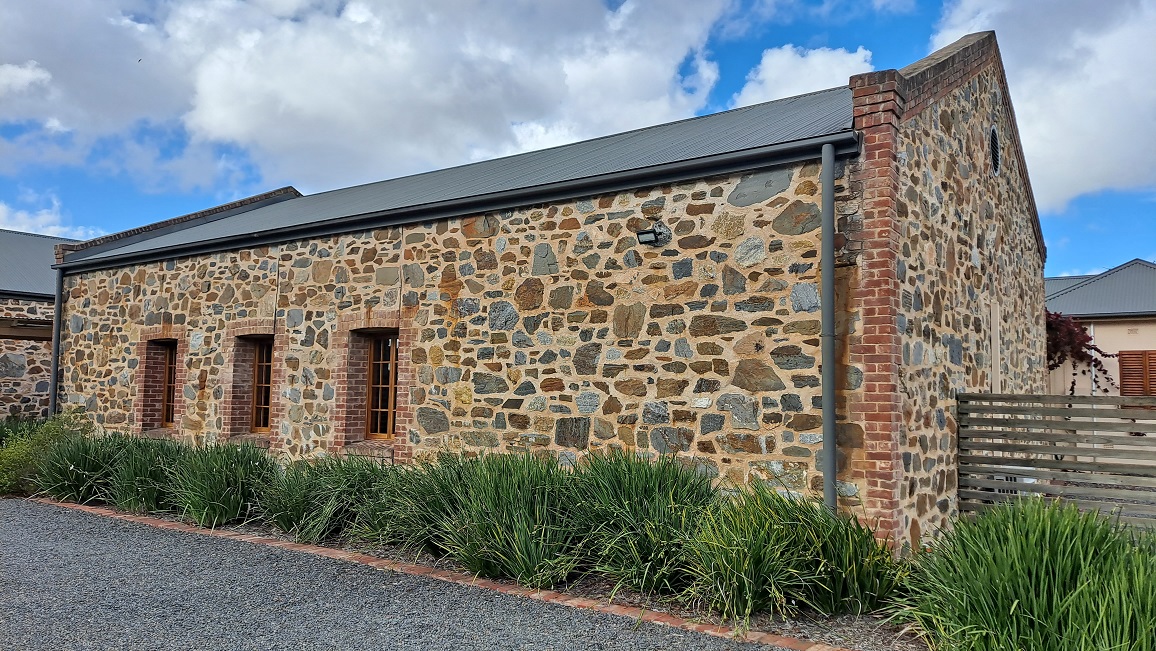
One of the things people love about the Barossa Valley are the old buildings. It is amazing to think that the early settlers to the area constructed their homes, sheds and other buildings by hand, without modern machinery, using the materials they found around them. When we look at the old buildings made of stone, they did an incredible job to collect all those stones and arrange them, so they fit together to construct a new building for their families and communities.
When see these stone buildings, we can think about the words of the Apostle Peter in this morning’s reading when he writes,
… you also, like living stones, are being built into a spiritual house to be a holy priesthood, offering spiritual sacrifices acceptable to God through Jesus Christ. (1 Peter 2:5 NIV)
This text is rich with imagery from the Old Testament when God’s people brought sacrifices to offer in worship at the temple in Jerusalem by the priests who served there. Peter uses his knowledge of this ancient worship which he would have experienced to describe something new that Jesus had established, and that we participate in through faith in him. In today’s message, we will look at four key ideas in this text and explore how they apply to us as God’s New Testament people through Jesus.
Firstly, Peter describes God’s people as ‘living stones.’ When we look at buildings made of bricks, each brick is the same uniform size and shape. Stone buildings aren’t like that. Each stone is individual and unique, just like God’s people. God didn’t create us to fit in to a predetermined mould and he doesn’t expect us to conform to a particular stereotype. Instead, God accepts us as unique individuals and connects us with others who are just as unique as we are, giving us a place to belong in relationship with others. To describe us as ‘living stones’ means recognising and accepting the differences we all have, and embracing the diversity that comes in community with people who are different to us.
God brings this diverse group of individuals together like a builder who is constructing a ‘spiritual house’. God’s ultimate purpose is to build up, not tear down. Sometimes we find it easier to tear down people who are different to us or have different ideas to us, but God wants to build us up together by giving us a place to belong with others and forming us into a vibrant community of faith. Peter describes this as a ‘spiritual house’, language which is often used in the Bible to describe the temple. This was where God’s presence lived in the world and where people could go to connect with the Divine. Peter wants to show us that as God builds up a diverse group of people as a community of faith, he is present through us in the world and people encounter him through us to find grace and blessing.
Thirdly, Peter describes God’s people as ‘a holy priesthood’. The priests of the Old Testament were the people who stood between God and his people, not as an obstacle to keep them apart, but to bring them together. The priests would represent the people to God and God to his people by presenting offerings and sharing blessings. Sometimes people still think about priests, pastors or ministers as having special access to God, but Peter’s point here is that we all belong to ‘a holy priesthood’ because of our faith in Jesus. We all function as priests, bringing God to the world and the world to God. As Paul explains in Ephesians 4:11-12, Christ gives apostles, prophets, evangelists, pastors and teachers, not just to do the work of ministry, but to equip God’s people for ministry, to build up – the word is the same one Peter uses in verse 5 – the body of Christ. God builds us all up as his people in a community of faith so we can all serve as his holy priests, bringing God and the world together, not just paying our pastor to do it for us.
Finally, as God’s ‘holy priesthood’ our purpose is to offer ‘spiritual sacrifices acceptable to God through Jesus Christ’. Under the Old Testament, these sacrifices would be animals, grain, food, or drink which God’s people would offer to the Lord. Jesus gave his body on the cross as the ultimate sacrifice to free us from the obligations of the Old Covenant and to establish the New Covenant of grace and love. When Peter writes here about ‘spiritual sacrifices’ we can understand his words through what Paul writes in Romans 12:1 about offering our bodies as ‘living sacrifices’ as our ‘true and proper worship’ (NIV). These ‘spiritual sacrifices’ can be anything and everything that we do and say which are offered to God through faith in him and in love for others. It might mean emptying the dishwasher, mowing the lawns, folding the washing, or being present with someone who is going through a hard time. Any good thing we offer to another person in the faith that Jesus gave everything to and for us, and as an act of sacrificial love for them, is a ‘spiritual sacrifice’ we make as a ‘holy priesthood’ as God builds us up as his presence on earth.
When we understand this verse in this way, Peter gives us a beautiful picture of what it means to be church. Sometimes the church can appear to be a rigid, inflexible, almost mechanical organization that demands a lot but gives little. Peter’s picture of church, though, is very different. For Peter, the church is people of faith, living stones whom God is building up as his presence in the world, sharing his grace and blessing through Jesus to everyone we meet. We are the church, God’s spiritual priesthood, offering everything we say and do to him and to others in faith and love. 1 Peter 2:5 gives us a picture of the church as a vibrant, dynamic and organic community of faith which is constantly growing, continually adapting, so all people can encounter God’s presence through us and find a place to belong in relationship and community with God’s holy people.
Maybe the next time you drive past a stone building, stop and look at the diversity of stones that the builder used. You might like to pull out 1 Peter 2:5 as you look at the stones and wonder which one best represents you. But then look at the bigger picture, the way God brings unique and diverse people together, building us up as a community of faith, so he can dwell in the world and people can encounter him through us, as we offer our whole lives to him as spiritual sacrifices, praising him for his sacrifice for us in Jesus and bringing his goodness and blessing to everyone we meet.
More to think about or discuss:
- What do you think of when you hear the word ‘church’? How is it similar or different from Peter’s description of the church in 1 Peter 2:5?
- What are some of the challenges that come with differences in the church? What are some of the blessings?
- Have you ever thought about your life as a ‘spiritual sacrifice’ to God for what he has done for us in Jesus? How might you live differently if you saw your life as your ‘spiritual sacrifice’ to God?
 Pastor Eugene Online
Leave a comment