In our New Testament readings over the last couple of weeks, we have heard Paul talk about Christ-like love in the life of the Christian faith community. A fortnight ago we heard Paul say that ‘love must be sincere’ as he instructed Christians to ‘be devoted to one another in love’ (Rom 12:9,10 NIV). Last week we heard that loving others fulfills God’s law with all its expectations and demands (Rom 13:8-10).
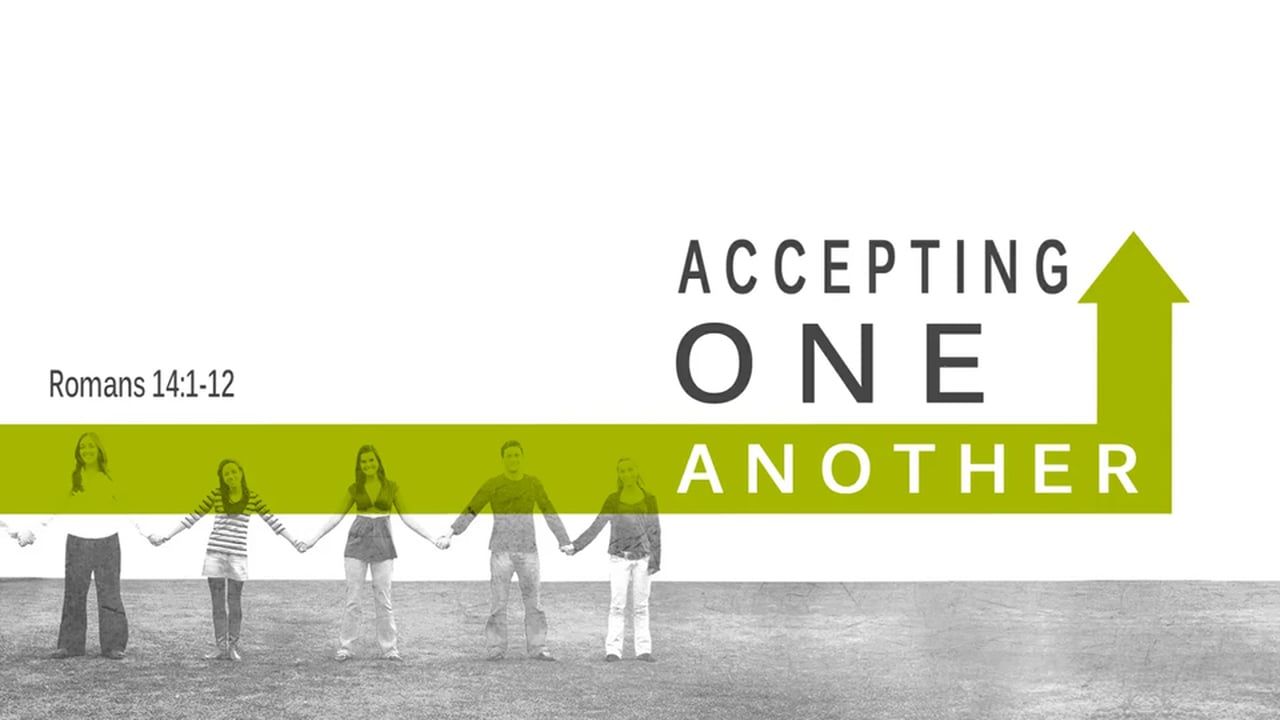
In this Sunday’s New Testament reading from Romans 14:1-12, Paul looks at how Jesus’ command to love looks practically when Christians have different theological opinions and practices. There were two main issues facing the young church in Rome that Paul addresses: what food they were allowed to eat and what days they were to observe as holy days.
Paul doesn’t tell us exactly what the problem was some people had with the food they were eating in the church at Rome. Some Jewish believers might still have wanted to follow the Old Testament dietary regulations in Leviticus 11 and Deuteronomy 14. It is also possible that Christians were afraid that the meat available at the local market had been offered to an idol in a temple. Eating this meat would have involved them in idol worship and they believed that was a sin. Paul talks about a similar problem in 1 Corinthians 8. Whatever their reasons might have been, there were people in the Christian community who were vegetarian because they believed eating meat was sinful, while others ate meat freely.
The second problem Paul addresses was which days the Christians were to observe as holy days or festivals. Again, Paul doesn’t tell us exactly what their disagreement was about. It is possible that some wanted to obey the Third Commandment by worshiping on Saturday, the Jewish Sabbath Day, while others might have wanted to gather on the first day of the week, Sunday, to celebrate Jesus’ resurrection. It is also possible that some wanted to observe the holy days or festivals commanded in Old Testament passages such as Leviticus 23, while others didn’t think that was necessary. These two disputes resulted in arguments and conflict in the church.
When we face disputes in the church, we can look to our church leaders to make a statement telling us the correct theological answer. It might surprise us to hear that when Paul addressed the disputes among the Roman Christians, he didn’t write to tell them that one group was theologically correct and the other was in error.
Instead, Paul begins by writing, ‘Accept the one whose faith is weak, without quarreling over disputable matters’ (Romans 14:1 NIV). Paul’s hope was that each group would accept the other without arguing about theological differences. The word Paul uses for ‘accept’ goes further than our idea of tolerating or putting up with someone who has a different opinion to us. To ‘accept’ someone in the Bible means to welcome them into our lives in the same way that we can welcome people into our homes. It means making them feel valued by taking them to ourselves just as they are with no questions, demands or expectations.
Paul urges the Roman Christians to do this because this is how God has accepted us. In verse 3, Paul says we can’t look down, judge, or condemn someone who does something different opinion from us because God has already accepted them. God has welcomed them into the Kingdom of God, taking them to himself just as they are with no questions, demands or expectations. Jesus has already done everything to make us acceptable to God through his life, death, and resurrection for us. Because God accepts us solely through faith in Jesus and not by keeping certain commands or not breaking others, we are free to accept others in the same way, even if they have different theological opinions from our own.
Paul continues with this line of thought throughout chapter 14 and into chapter 15. He tells the Roman Christians to ‘stop passing judgement on one another’ (v13), that we are not acting in love if our actions distress another Christian or harm their faith (v15), the Kingdom of God is about ‘righteousness, peace and joy in the Holy Spirit’ (v17), not what we eat or drink, and we are to ‘make every effort to do what leads to peace and mutual edification’ (v19). Paul’s goal for the Christian community is that each person ‘should please our neighbours for their good, to build them up’ (Rom 15:2). Paul concludes with the appeal: ‘Accept one another, then, just as Christ accepted you, in order to bring praise to God’ (v7).
Paul gives us a very different way to deal with disputes and disagreements in the church. Instead of arguing about who is right or wrong, and maybe moving down the road or around the corner to build our own church when we don’t agree, Paul urges us to accept one another and do everything we can to work for harmony by building each other up in faith, hope and love as Jesus’ followers.
What might our church be like if we listened to Paul and followed his approach to disputes and disagreements? We can apply Paul’s approach to so many things we disagree on and argue about. Over the years, churches have disagreed on many different issues. Some of them were theological such as the thousand-year reign of Christ in the end times, some were more cultural such as forms of worship, others were purely practical like the colour of the carpet. Possibly the most disputed issue in our own LCANZ is whether the Bible permits ordaining women as pastors. As we look for God’s will for his church, it is critical that we don’t view these as arguments to be won. Instead, seeing each other through the eyes of Christ, we listen to Paul urging us to accept each other, to honour our Lord, to live at peace with each other, and build each other up in faith, hope, and love as Jesus’ disciples.
Jesus left his followers with one command: to love one another just as he loved us (John 13:34). We learn a lot about what Christ-like love looks like when we read Paul’s letter to the Romans. He guided and instructed them on how Jesus’ love looked like in their particular time and place. When we have disputes in our community of faith, central to showing Christ-like love is accepting each other in the same way the God accepts us, doing everything we can to work towards peace and harmony in our church, and being ready to give up what’s important to us so that we can build others up in faith, hope and love. Jesus sacrificed everything so our Father in heaven would accept us as we are, welcome us as his children, establish peace among us, and build us up as his holy temple in the world. He asks us to do the same for others.
More to think about or discuss:
- What are some disputes you have encountered in the church? Were they handled in the way Paul instructs in Romans 14? If not, what might have happened if they had been?
- What does it mean to you that God has accepted you because of what Jesus has done for you (v3)? How is this good news for you in your life?
- How might you be able to accept someone who has a different theological opinion in the same way? How might building them up in faith lead to greater peace in the church?
 Pastor Eugene Online
Leave a comment