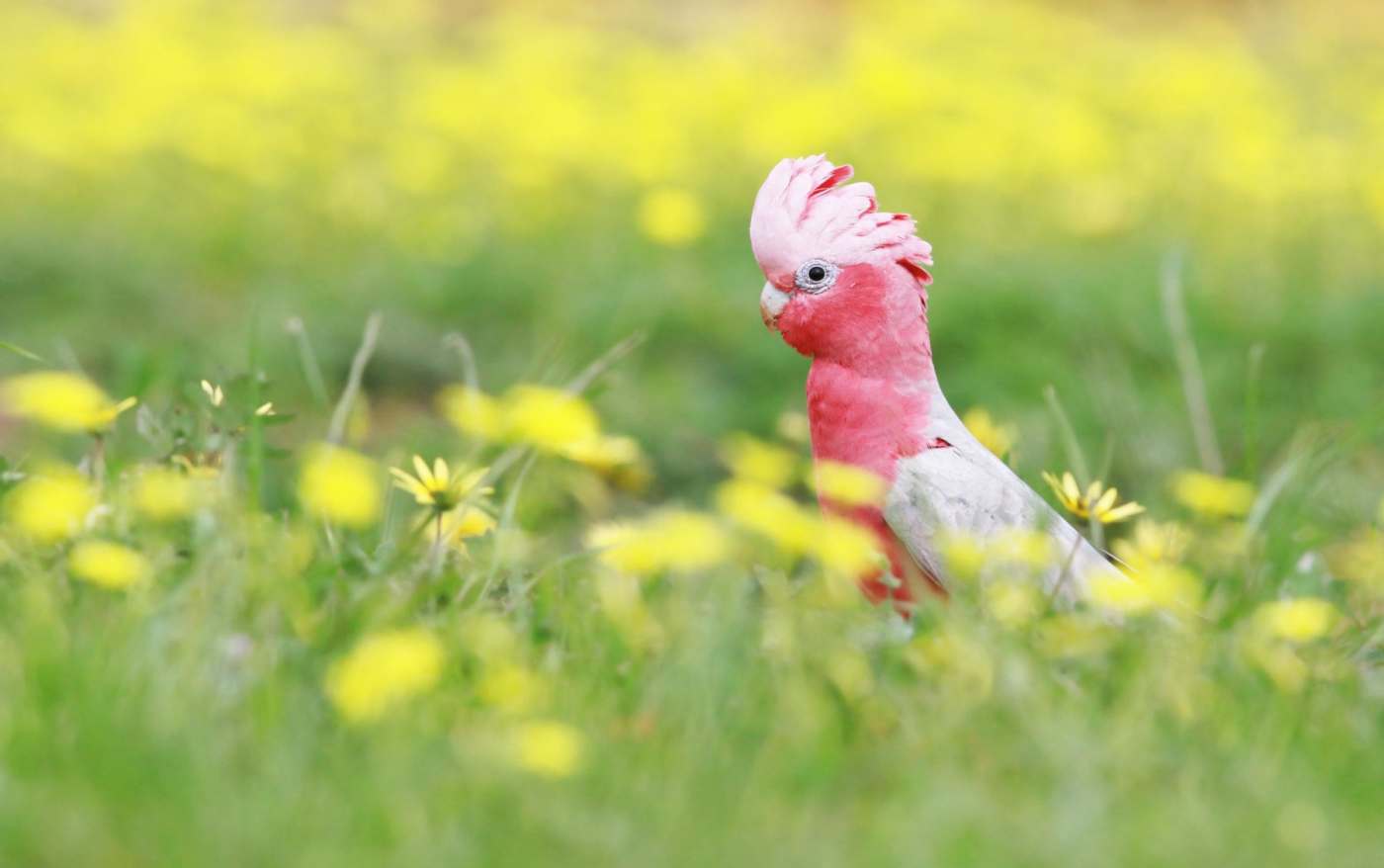
There are a lot of good things about living in the Barossa Valley. Over the last year since we’ve moved here, two aspects I enjoy about living here are the birds and the flowers.
There are a wide variety of birds that live in the Barossa. I can understand why they can be a problem. They can be messy in what they eat and what they leave behind, they can eat the fruit growing on our trees and vines, and nobody likes being swooped by a magpie! At the same time, however, to see flocks of birds flying in formation through the sky, to hear their calls in the early morning or as the sun is setting, or even just to look at their vibrant colours can remind us about God’s amazing creative power.
In a similar way, it has been incredible to see wildflowers appear after the rains we had just before Christmas. As I’ve been driving around over the last month or two, I’ve observed various types and colours of flowers along the side of the roads and in the paddocks. I don’t know whether these flowers appear regularly during the summer months or if they have come up because of the unseasonal rains we had, if they are a welcome sight to or if they are a pest for farmers and grape growers who are trying to keep their paddocks free of weeds, but to an untrained observer like myself, they look pretty.
Whether we see the birds of the air and the flowers of the fields as evidence of God’s creative goodness or as nuisances to our farms and gardens, we might be surprised that Matthew 6:25-33 is the gospel reading for Harvest Thanksgiving which we celebrate this week. Jesus’ words say nothing about sowing, reaping, or other activities we usually associate with Harvest Thanksgiving. However, they still speak good news to us.
I have a lot of respect and admiration for farmers, fruit growers and others who earn a living off the land. Compared to most other jobs, farmers and fruit growers face a lot of uncertainty. So much of their livelihood depends on things out of their control. The weather can either help produce or destroy a whole year’s work. The prices being paid can mean the difference between a successful year and going further into debt. Whether or not there are buyers for the produce is another factor that they have no control over.
It’s no wonder that people who work the land can find it difficult to remain positive and optimistic. We can all struggle with the challenges and difficulties that we face during this time of economic uncertainty, the spiraling costs of living, an increase in armed conflicts around the world, and rapid technological change. It is no wonder that a lot of people are struggling with their mental health and maintaining a positive view of life.
To hear Jesus’ teaching in Matthew 6:25-33 to not worry can sound simplistic and unrealistic. I’ve had many people over my years of ministry listen to these words of Jesus and find them difficult to accept. They’ve told me that Jesus was living in a different time, he didn’t understand the pressures of modern life, and we really can’t take him seriously.
It is good for us to remembers that Jesus doesn’t want us to just listen to his words, but to do what he says (James 1:22). When we are under stress, worried about things, or facing uncertainties of any kind, it might be time to read this passage again and do what Jesus says to learn a different way of dealing with worry in our lives. It is probably the best time for us to walk in the paddocks or on the side of the road and really look at the birds. Jesus points out that ‘they don’t plant or harvest or store away in barns, (but) your heavenly Father feeds them’ (v26 NLT). We are much more valuable to our Father in heaven than they are. We can see that in the crucifixion of Jesus where God paid the ultimate price, the life of his Son, to reconcile with us and redeem us so we can live in a new relationship with him through faith in his grace. Because we are so valuable to him, his promise is that he will look after us in the same way that he looks after the birds we see flying around us.
Jesus goes on to teach us to look at the flowers in our paddocks. He says, ‘if God cares so wonderfully for wildflowers that are here today and thrown into the fire tomorrow, he will certainly care for you’ (v30 NLT). Again, through the sacrifice Jesus made for us on the cross, we can trust that God values us and cares for us. He will always look after us just as he looks after the flowers that bloom on the side of the road after summer rain which we drive past and probably don’t even notice. God notices. God sees. God provides for, cares for and looks after the flowers, even if we don’t realise they exist. He notices, cares for, and looks after us in the same way because we are worth a lot more to him.
At this point in the service, I would love for us all to go outside and put into practice what Jesus teaches us by looking at the birds of the air, looking at the flowers in the paddocks, and remembering that God our Father looks after them, so we can be confident that he will look after us, too. It’s one thing to theorize or theologize about it, but Jesus doesn’t give us these words for a nice sermon. He wants to liberate us from worry, free us from stress, and give us a full and abundant life (John 10:10). We discover, embrace, and grow in the life Christ gives us when we listen to what he’s saying and follow his teaching in faith.
Today as we give thanks for the harvest and all the other good things God provides for us in his grace and love, we can see more evidence of God’s loving care for us. We might have had a good year or not. We might have a lot to be thankful for or our losses might seem overwhelming. In the middle of it all, God is at work, providing for us and giving us every good thing we need for life in this world and the next through Jesus. As we give thanks for his blessings, they remind us that God will continue to provide for and care for us into the future, just as he has done in the past, and we can trust his goodness to us through Christ.
Whatever work we do, paid or unpaid, we all face worries, stresses, and uncertainties of various kinds. Before they get too big, listen to Jesus and follow his teaching. Go for a walk outside. Look at the birds of the air. Look at the flowers in the paddocks and gardens around us. God cares for them. God provides for them. God feeds and clothes them. The crucifixion of Jesus tells us that we are worth a lot more to him than they are, so we can be confident that he will always cares for, provide for, feed, and clothe us, so we can reflect his glory to the world. That’s something really worth giving thanks for.
More to think about or discuss:
- What worries, stresses or uncertainties are you facing in your life? If there aren’t any, spend some time thanking God for the good in your life. If there are, tell God what’s worrying you by writing them down, talking to him out loud or praying silently…
- What is your reaction to Jesus’ teaching on not worrying? Does it sound realistic? Do you think we can find greater freedom from worry by doing what Jesus says? Explain why…
- Try following Jesus’ teaching. Go for a walk. Tell God what’s worrying you. Look at the birds and flowers. Remember what the crucifixion of Jesus says about what you’re worth to God, and that he’ll look after you the way he looks after the birds and flowers…
 Pastor Eugene Online
Leave a comment