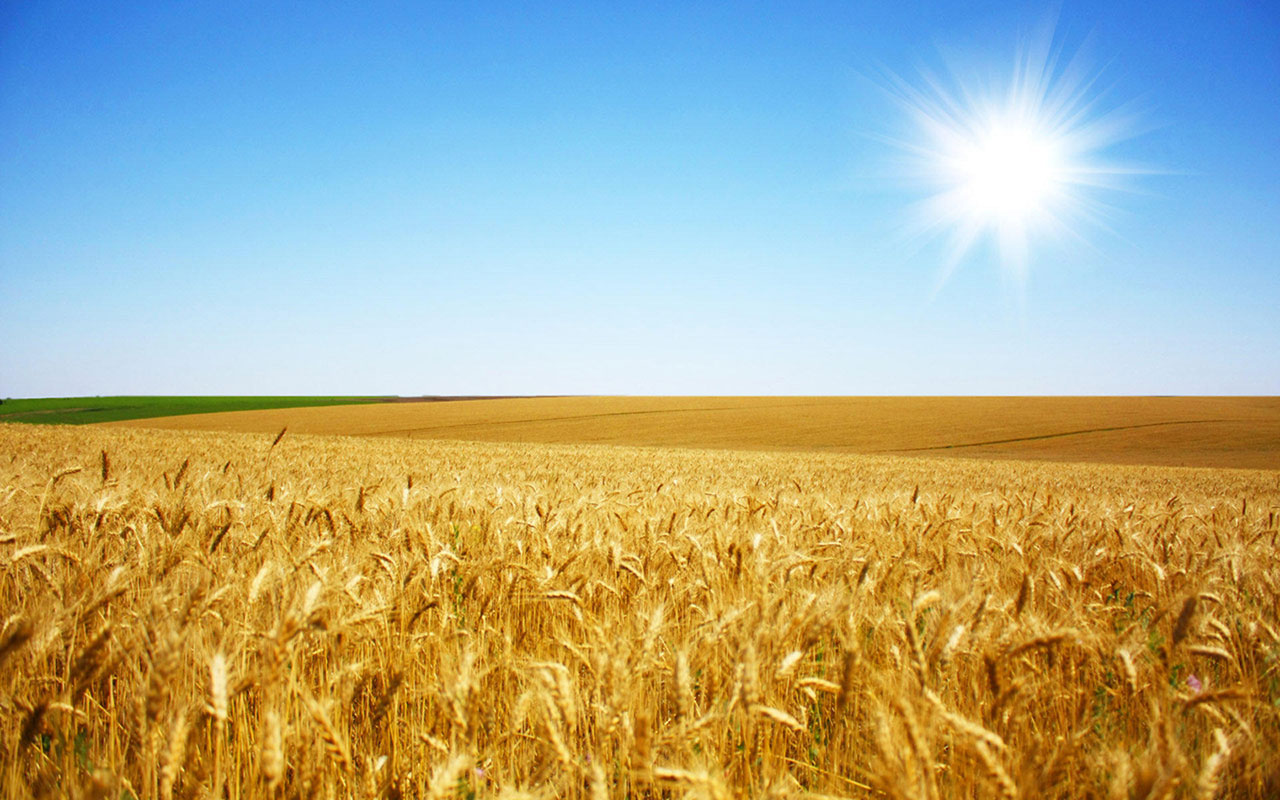
When we go to the supermarket or visit a bakery, there is a huge variety of products we can buy that are made from wheat. We can choose from an enormous range of different breads, cakes, biscuits, breakfast cereals, and other foods. This can be hard for people with a gluten intolerance or allergy who can’t eat wheat because so many foods contain wheat flour.
As we all know, the flour to bake these products come from farms that grow wheat which is sent to the mill. Each year farmers sow the wheat and take care of it until the mature plants are ready for harvest. The wheat that is sown comes from previous years’ harvests which, in turn, have come from wheat that had been sown and harvested before that. In writing this, I realize that there are people in our church who know a lot more about planting and harvesting than I do, and they know that to grow more wheat, you need to plant it first. The point is to highlight the difference between the wheat which is milled into flour that can make a wide variety of tasty food, and the wheat which is planted so more wheat can be grown.
This is the comparison which Jesus points to in this week’s Gospel reading from John 12:20-33. He teaches us that ‘unless a kernel of wheat is planted in the soil and dies, it remains alone. But its death will produce many new kernels – a plentiful harvest of new lives’ (v24 NLT). From a farmer’s point of view, this might sound like something that everyone should already know. However, the words Jesus uses in this teaching are significant. He doesn’t just talk about ‘planting’ and ‘harvesting’. Jesus also uses the language of dying and new life. This passage is more than just a lesson in how to grow a good wheat crop.
Jesus is firstly teaching us something about his own death. The ‘kernel of wheat’ that he talks about is himself. He is pointing us towards his death on the cross and burial. He is the one who dies and is planted in the ground. Just like a kernel of wheat is put in the ground and then grows up from the ground as a new plant, so Jesus, after he had been planted in the ground in his burial, would shoot up again like a new plant in his resurrection. Mature wheat plants produce more wheat, giving life to generation after generation of new wheat plants through the grain it produces. Jesus does the same for us. When people are connected to him through faith, we become the new kernels of wheat that receive life from the plant that has grown up from the ground. Like new grain on a wheat plant, we receive new life when we are part of Jesus’ resurrection through faith in him.
The second thing Jesus is teaching us in these verses is about how we live this life that he has given to us through faith in his death, burial, and resurrection. He has already said that ‘unless a kernel of wheat is planted in the soil and dies, it remains alone’ (v24 NLT). While he is referring to himself, he is also talking our lives in him. He continues,
Those who love their life in this world will lose it. Those who care nothing for their life in this world will keep it for eternity. Anyone who wants to serve me must follow me, because my servants must be where I am. And the Father will honour anyone who serves me. (vv25,26 NLT)
Jesus is saying that if use the new life he has given us for ourselves, we are like grains of wheat who remain alone. We might have the new life of the risen Christ in us, but like wheat that is stored away or milled into flour to be consumed as food, our lives will be limited. However, if we follow in the way of Jesus by giving our lives over to him, we will find a fullness of life that goes beyond the here and now and reaches into eternity. Jesus is talking about following him as his disciples, learning from him a different way to live, modelling ourselves on him, and finding the new, abundant life that he promises.
We find this life by being buried with him, just like a kernel of wheat.
Throughout his ministry and especially in the Garden of Gethsemane, Jesus faced the choice of living for himself or for others. Was his life going to be more about himself and what he wanted, or others and what they needed? Another way to think about the choice Jesus faced was whether he was going to live more for what he got or what he gave, no matter what the cost. In using a kernel of wheat to describe what he was doing, Jesus is showing us that he chose the path of giving over getting, and serving others over himself. In giving his life up, going to the cross and being buried in the ground, Jesus was given eternal life in his resurrection. Jesus’ choice of others over himself and giving over getting by going to the cross and grave was living in faith and love, trusting his Father’s life-giving resurrection power to raise him up and giving us the life we need through his self-sacrificing love.
This is the life he calls us to learn as his disciples. We follow Jesus in faith and love by trusting God’s life-giving resurrection power to raise us up and showing the same sacrificial love to others that we find in Jesus. Jesus promises that when we learn this way of life from him, God works through us to produce a plentiful harvest of new life in others. Our natural tendency, both as individuals and as organisations, is usually self-preservation. We tend to do what we can to try to hang on for life. The way Jesus lived and taught is radically different. It prioritises trusting God and loving people, serving others over ourselves, and what we give over what we get. Like grain that is buried in the ground, when we trust Jesus and follow him in the way of self-sacrifice, that’s where we find life for ourselves and for others. When we follow Jesus to the cross and grave, people encounter God’s life-giving love for them through Jesus in us.
The next time you are in a supermarket or bakery, take some time to look at all the different food that comes from wheat. Consider that the only reason we can enjoy those foods is because of the wheat that was buried in the ground to give life to new grains. This becomes firstly a powerful message of good news for us. The crucified Jesus was buried in the ground to be raised up by his Father and to give new life to us. What do we do with the live he has given us? Jesus warns us that when we hang on to it we will ultimately lose it. Jesus’ promise is that following him in the way of faith and love, trusting God and loving others, choosing to serve others over ourselves and giving over getting, will lead us to not only find life for ourselves, but will also result in a harvest of new life for others.
More to think about or discuss:
- What would you do if someone gave you a bag of wheat – mill it into flour & cook something? Or plant it? Why would you do that?
- What do you think about Jesus’ image of his crucifixion and burial being like a wheat kernel which is buried to bring new life? What do you like about it? What is challenging?
- What might it look like to live in the way Jesus teaches by following him in faith and love in your life?
 Pastor Eugene Online
Leave a comment