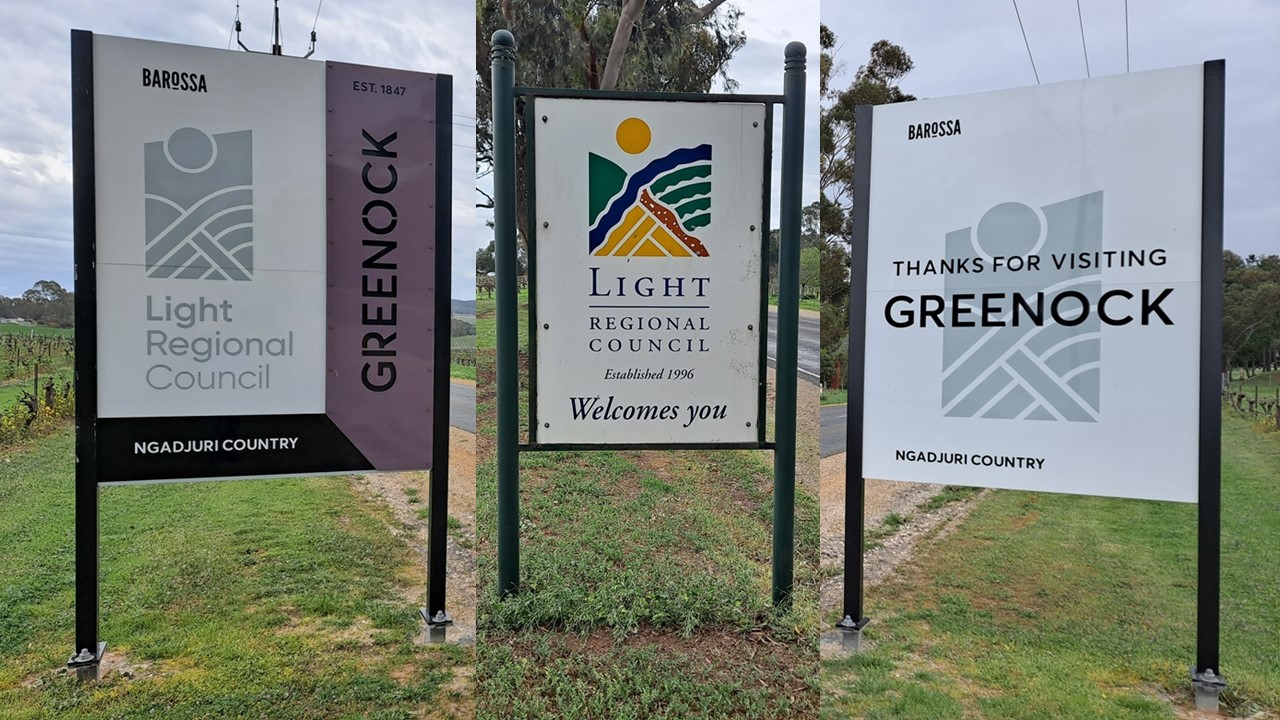
When we drive around the Barossa Valley it’s easy to tell when we leave one region and enter another. Every town has a sign to welcome people and then farewell us when we leave. We can tell when we move from one local council area to another because more signs let us know when we have crossed the boundary. While other regions, such as electoral zones, might not be clearly indicated, we can often tell when we cross a boundary from one area to another.
Thankfully the relationships between the various towns and local council areas of the Barossa are pretty harmonious. Even though there might be some sporting rivalries across these boundaries, such as between Nuriootpa and Tanunda for example, generally we can cross the boundaries in the Barossa freely and we get along pretty well.
Can you imagine, however, what life could be like if people on one side of the boundary saw those on the other side as being inferior in some way, less important, or even sub-human? What do you think it might be like to live in a region where people on the other side of a boundary saw us as being less valuable, unclean, or inferior in some way?
This was the situation which existed between the Jews in Jesus’ day and people who lived in the regions that bordered them. The Jewish people saw themselves as God’s chosen nation. They traced their ancestry back to Abraham and God’s promise to make him into a mighty nation. They were the people whom God had rescued from slavery in Egypt under Moses and to whom God had given his Law at Mount Sinai. Following these commands and regulations set them apart from every other nation of the world as God’s holy people who were clean and pure. The Jews of Jesus’ time regarded other nations who didn’t have the Law or followed God’s requirements as unclean. They were Gentiles, the impure peoples of the world, whom the Jews saw as inferior because they were outside of a covenant relationship with God and they didn’t follow his holy Law.
In Mark’ gospel, Jesus conducted the early part of his ministry in Judea and Galilee where lots of Jewish people lived. Mark 7:24-37 began a new phase of Jesus’ ministry. He moved out of the regions of Judea and Galilee and crossed the geographical boundaries between God’s holy people and the unclean Gentiles. Earlier in this chapter, Jesus challenged the views of the religious leaders of his day by teaching that what makes people unclean is what comes out of them, not what goes into them. Now, Jesus put his teaching into practice by venturing into ‘unclean’ Gentile territory and bringing God’s cleansing grace to them.
Mark tells us two stories of how Jesus did that. The first involves a Greek woman, born in Syrian Phoenicia, whose daughter was possessed by a demon. After a conversation with her which can be challenging for us in a few ways, Jesus freed her daughter from the demon and made her clean from a Jewish point of view. The second person was brought to Jesus in a region called the Decapolis, which literally means the Ten Towns. This man could not hear and had a severe speech impediment. Jesus put his fingers in the man’s ears, spit on his fingers (an action which was considered unclean in itself) and then put his fingers on the man’s tongue. This opened his ears and freed his tongue so he could hear and speak perfectly well. In both stories, Jesus displayed God’s grace by crossing geographical, racial and gender-based boundaries to make people, who were regarded as unclean, pure again.
These stories are important for us in a couple of ways. Firstly, there can be times in our lives when we can think we have crossed a moral boundary and are outside of God’s grace. Maybe we have done something we think is unforgivable, or someone else has done something to us that makes us feel dirty, unclean or unacceptable to ourselves, to other people or to God. Whenever we feel like we are outside the boundaries of God’s grace or love for any reason, Jesus crosses those boundaries to find us and to make us clean. Just like he crossed the geographical boundaries to find the two people in these stories from Mark 7:24-37, Jesus continues to cross every boundary that we or others set up and goes into unclean places to find unclean people to make us clean and pure again through his grace-filled love. Jesus began his boundary-crossing ministry at his birth when he crossed the boundary of sin which separated us from God. He carried everything that makes us unclean in his body to the cross where he disposed of it by putting it to death. In his resurrection, Jesus raises us with him as new, clean and pure people. Our purity and spiritual cleanliness don’t come from obeying the Law but through faith in Jesus who makes us clean, frees us from evil, opens our ears to hear his good news, and liberates our tongues to proclaim his goodness. Jesus crossed the boundaries of his day to make the people in these stories clean and pure. He crosses our boundaries to do the same for us through his grace and love.
As Jesus’ followers, he then calls us to follow him by crossing any and all boundaries that we might face to bring his grace to others. We can be good at setting up boundaries to keep us safe or to try to keep others in their place. However, when we set up boundaries we can be playing a worldly game of us versus them, making ourselves feel more holy or righteous, or more important or valuable than others. This is contrary to God’s grace in Jesus. As Paul writes in Ephesians 2:14-16, Jesus has torn down the dividing wall of the law that divides us, along with all the rules, demands and expectations we can use as boundaries between us and others. Jesus calls us to follow him, to cross the boundaries people might set up and extend his grace and compassion to others like he did to the people in these stories. Jesus’ cleansing grace in his life, death and resurrection is greater than anything which makes us unclean or unacceptable and the boundaries which divide us. When we follow Jesus across those boundaries, he liberates people from the evil that binds them, opens their ears to hear the good news, and releases their tongues to proclaim his goodness in their lives.
Maybe the next time you drive past a sign telling you that you are either entering or leaving a town or local council area, you might like to think about the boundaries Jesus crossed. Jesus went into places which were considered unclean to bring grace to people by liberating them from evil, opening their ears and freeing their tongues. As we cross the boundaries established by our culture, God give us the grace to extend his liberating and life-giving love to everyone we meet along the way.
More to think about or discuss:
- What are some geographical boundaries you are aware of where you live? How do those boundaries show themselves in people’s relationships with others?
- Why do you think Jesus crossed the boundaries in these stories? What impact do you think it had on these people when he crossed those boundaries?
- What boundaries keep you apart from other people in your life? How might trusting in God’s grace for you in Jesus help you to cross those boundaries?
 Pastor Eugene Online
Leave a comment