Most people who enjoy music will have a favourite song. We might listen to a lot of songs once, twice or maybe a few times, but there are some songs that we can listen to over and over again, sometimes over a period of decades. They might have lyrics we can relate to, or a melody we love, or they might remind us of a particular time, place, event or person. With all the countless songs which have been written, produced, listened to and enjoyed, there are some songs which are classics which we can carry with us our whole lives.
The Book of Psalms is the song book of the Bible. Many of the 150 psalms it contains were written over 3,000 years ago and have been sung in a wide variety of languages and musical styles ever since. The passing of time has left us with lyrics but no music to these songs. This has given each generation the freedom to reinterpret these songs in ways which have connected with and supported the spiritual journey of God’s people for thousands of years.
One of the best known and most loved of the psalms is the one set aside for Good Shepherd Sunday, Psalm 23, also known in English as The Lord is My Shepherd. It is attributed to David, the young shepherd boy who killed the Israelites’ enemy Goliath, and who grew up to become Israel’s greatest king. We don’t know whether David wrote it as a young man in the fields as he watched over his sheep, or as an older man, reflecting on the days of his youth, but it draws on David’s experiences as a shepherd to describe the goodness of God which provides for us and protects us from everything that would harm us.
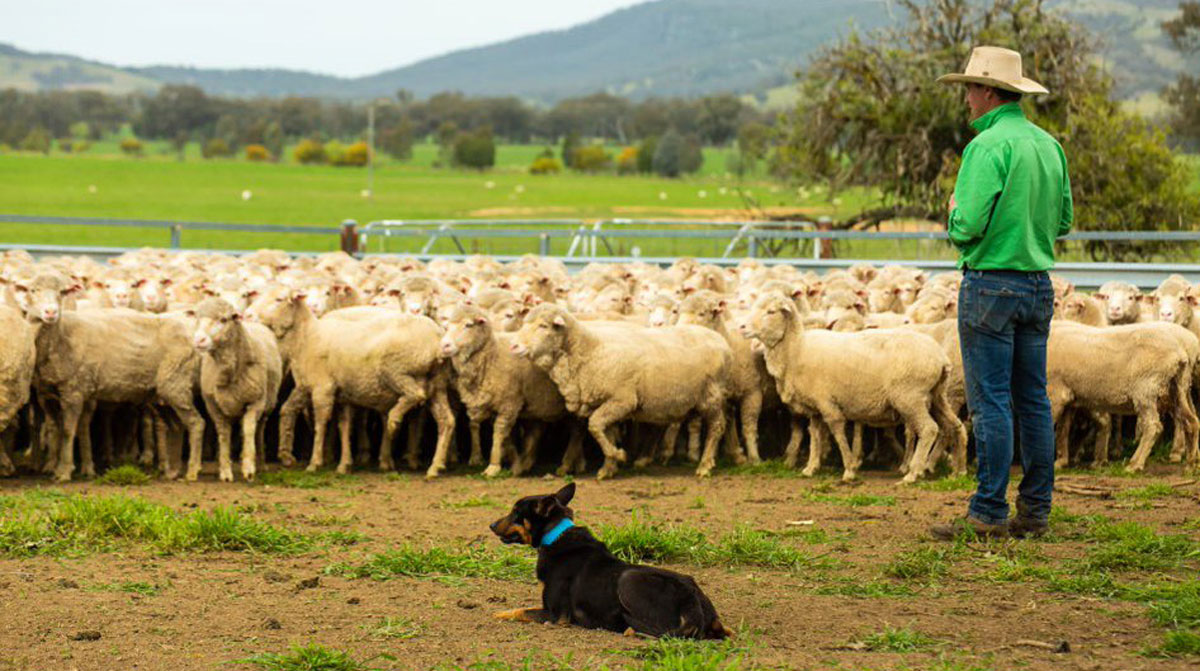
Psalm 23 uses the relationship of trust which exists between sheep and their shepherd to describe how God watches over and cares for his people. The psalm opens by saying that because the Lord is our shepherd, we will never be in want (v1 ESV) and we will have everything we need (NLT). This is God’s promise that as he watches over us and as we walk with him in faith, he will provide for all our needs for this life and the next.
It goes on to describe God leading us to green pastures with gentle streams where we can find rest and peace (v2). This idyllic scene can seem a long way from the busyness of life and a stark contrast to the dry, barren country of Israel and even our own land. However, God our shepherd knows where to find good feed and water and promises to give peace and rest to refresh our weary souls as we trust him. Verse 3 continues by saying that God knows the good paths in life and he leads us along these life-giving ways so we can honour him.
We can find comfort and hope in even the darkest times of life. David tells us that even when we ‘walk through the darkest valley’ (v4 NIV) with threats all around us, we don’t need to be afraid because God is always with us to protect, guide and provide for us. The shepherd’s tools of the trade, his shorter rod which is designed to hit things and his longer staff to fend off danger, give us comfort as they protect us from threats and keep us safe.
The table prepared in the presence of enemies (v5) can mean two things. It can be a banquet of victory with the enemies present to witness the triumph of the shepherd over them. It can also mean a feast to which enemies are invited to bring about reconciliation and peace. The banqueting table becomes a place where people who were once in conflict are now brought together in a new relationship. At this feast, we are treated with honour as our heads are anointed with oil, and provided with the abundance of the shepherd’s goodness as our cups are filled to overflowing with all the best things our shepherd has to offer us.
The psalm concludes by saying that the ‘goodness and love’ (v6 NIV) or the ‘goodness and mercy’ (ESV) of the shepherd will ‘follow’ (NIV) or ‘pursue’ (NLT) us all the days of our lives. God’s goodness and love will chase us down no matter where we might go, to fill our lives with his blessing and give us a place in his home where we can live with him for eternity.
All these promises are fulfilled in Jesus who identified himself as the Good Shepherd (John 10:11-18). Jesus comes to give us rest (Matthew 11:28) and peace (John 14:27; 20:21,26) as he asks us to trust him in all things. He guides us along right paths which lead to a full and abundant life by calling us to follow him in faith, hope and love (Matthew 7:13; John 10:7-10). He comes to us in the dark valleys of life, telling us not to be afraid because he is with us in his resurrection power (Matthew 8:18-27; 28:20). Jesus invites us to the table of Holy Communion where he feeds us with his own crucified and risen body and blood (Luke 22:19,20; 1 Corinthians 11:23-26). He gives us victory over sin, death and the power of evil while he reconciles us with former enemies who are united with us in the one body of Christ. The love of God for us in Jesus follows us and pursues us our whole lives, searching for us like the shepherd searched for his one lost sheep (Luke 15:1-7), until at last we will find a home for all eternity in the mansion Jesus himself has prepared for us (John 14:1-4).
God extends all these amazing promises to us when we listen to Jesus’ voice, hear him call our name, and follow him in faith, hope and love, which we hear about in this week’s gospel reading, John 10:22-30. To be part of Jesus’ flock and to live with him as our shepherd means living as his disciples as we learn to trust him in all circumstances and to love one another the way that he loved us. Jesus, our Good Shepherd, provides for all our needs, gives us rest and peace for our souls, keeps us from danger, and gives us a place at his table and in his home. He invites us to live in relationship with him through faith and walk in the paths he leads us in Christ-like love. If or when we wander off to follow our own paths, his goodness and love pursues us to bring us back to him. When we stay close to him in faith and walk along the right paths of hope and love in which he leads us, we find the fullness of the blessings Psalm 23 promises us. By staying part of Jesus’ flock and by following him, he leads us in life-giving ways, and we will never want for anything, in this life and the next.
Many people have continued to set the amazing and grace-filled words of Psalm 23 to music, more than 3,000 years after they were first written. Whether we like traditional hymns, contemporary worship music, or something more alternative, there is probably a version of this psalm which will connect with each of us. When we are in need, when we are tired or weary, when we are feeling lost or going through a dark time, God promises us through Psalm 23 to provide for all our needs, to give us rest, to lead us in good ways, to protect us and pursue us in goodness and love until we find a home in God’s eternal home forever.
More to think about or discuss:
- What is your favourite song? Why do you like it? Why do you think you have continued to like that song instead of others which you might have forgotten about over the years?
- As you read Psalm 23, what speaks good news to you in your life right now? What is God’s promise to you in these words? How does God fulfil that promise to you in Jesus?
- What is your favourite version of Psalm 23? You might like to search for different musical settings on the internet and listen to the various ways people have set this psalm to music…
 Pastor Eugene Online
Leave a comment