A list of the happiest cities in the world was recently published by The Institute for Quality of Life in their Happy City Index. At the top of the list was Copenhagen in Denmark, followed by Zurich, Switzerland, and Singapore. Further down the list is Adelaide in 29th position. Being identified as the 29th happiest city in the world isn’t bad when we read that Geneva, Switzerland, came in 20th, Barcelona 22nd, and London in 31st place.
It is a real honour that Adelaide is on the same list as these amazing cities. They are beautiful places which are full of history, culture and amazing architecture. While we might love living close to Adelaide in the Barossa Valley, some people might dream about living in one of these incredible overseas cities where they can enjoy all the good things they offer. What brings us back down to reality, however, is realizing how far away they are from us and how expensive it is to live in them.
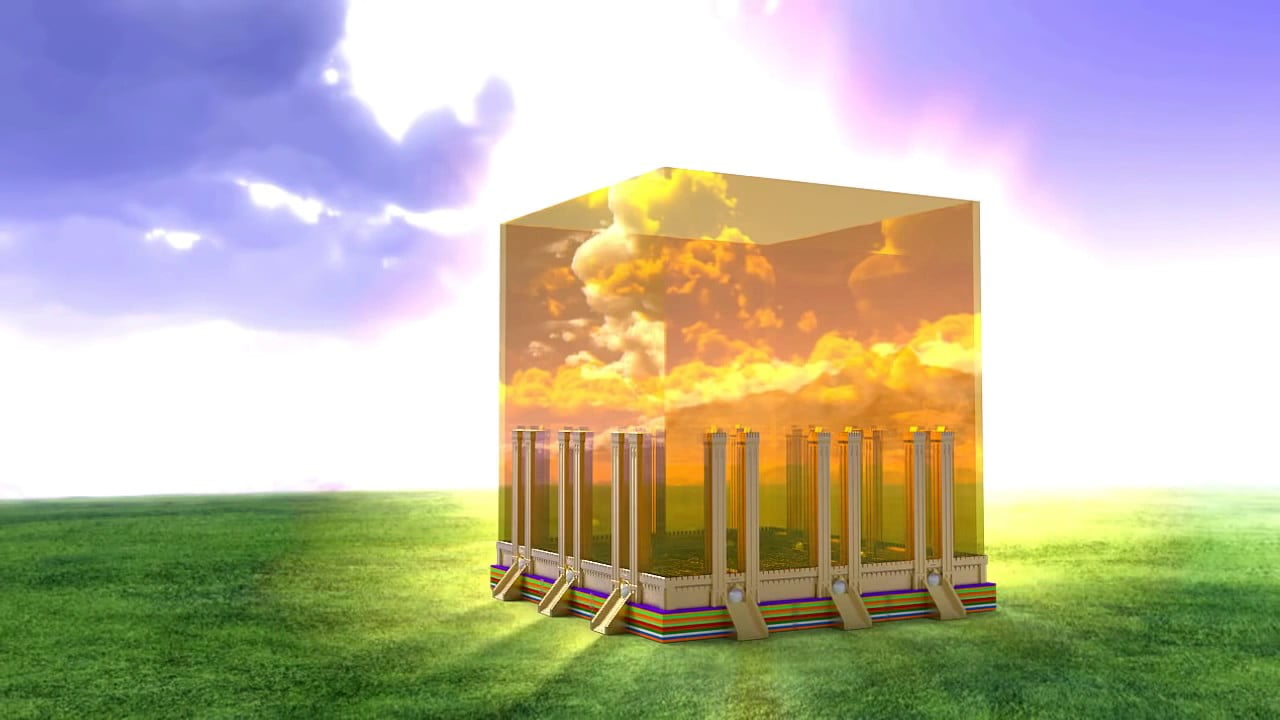
The cities on the Happy City Index pale in comparison to the heavenly Jerusalem which John describes in this week’s reading from Revelation 21:10-22:5. John tells us that the city had twelve gates, 3 each to the north, south, east and west, with the names of the twelve tribes of Israel on them (vv12,13). It had twelve foundation stones inscribed with the names of Jesus’ apostles (v14). The city had sides that were more than 2,000 kilometres long and wide and high (v16). That’s roughly the distance from Adelaide to Brisbane, which can make us wonder if John wanted us to read his description literally or if there’s a deeper meaning to it. He goes on to write that the city was ‘pure gold, as clear as glass’ (v18 NLT) with twelve foundation stones of precious stones (vv19,20). Each of the twelve gates were made of a giant single pearl (v21). There was no temple in the city, and it had no sun, moon or stars because God illuminated the city with his glory (v23). There was a river of the water of life running through the city and on each side of the river grew a tree of life whose leaves were used to make medicine which brought healing to the nations (22:1,2).
John is describing a picture of the eternal home God has prepared for his people. We can have a lot of different ideas about what heaven is like. For example, some imagine heaven to be living in the clouds strumming harps or standing around in white gowns singing hymns to Jesus, similar to the scene John describes in Revelation 7:9-17. Others suggest that heaven can be whatever you want it to be. While there are lots of different ideas about what heaven might be like, here, at the end of the Book of Revelation, John gives us a glimpse into what God will do at the end of time. He will gather his people into his amazing city of gold and pearls and precious stones, where we will live with him forever.
There are a couple of very significant things about John’s vision of the heavenly Jerusalem. Firstly, people don’t go up to live in heaven. In John’s vision, the heavenly city comes down to earth. This is so important that John mentions it twice, in verses 2 and 10. It tells us that the Christian life is not about trying to work our way up to heaven. Instead, God brings heaven down to earth for us to live forever in a redeemed world that has been restored to its original perfection. Many people can think that living with God in eternity is too far away and impossible for us to reach, just like some think that living in a city like London, Paris, Zurich or New York is impossible because of the distance. Part of the significance of John telling us that the heavenly Jerusalem will come down to earth is to tell us that we don’t have to try to reach it because it comes to us through Jesus and in the gospel.
The heavenly Jerusalem coming to earth is also significant because it tells us that the world is worth saving. Sadly, many people including Christians use religion to try to escape this world. People can look at the problems, pain and brokenness of this world and want to use religion to get away from it, to just focus on something we hope will be better, and to attempt to escape from the reality of life in this world. God doesn’t abandon this world, but comes to it in Jesus to redeem it, renew it and restore it to the goodness it had in the beginning. This means that we can embrace life in this world, affirm it, and work for a better world because we know that in the end God will make all things new in Christ (v5, 2 Corinthians 5:17). The heavenly city coming down to the earth to bring healing to the nations (5:2) gives our lives purpose as God calls us to work with him in his plan to fill the earth with his goodness.
Living in one of the cities on the Happy City Index might also seem out of reach because it costs a lot to live in most of them. No matter how hard we work or what we try to earn, we probably wouldn’t have enough money to live there. We can look at the heavenly Jerusalem in a similar way. If it was up to us, none of us could make it into the city by our own efforts. Thankfully, God welcomes us into the city and gives us a home there because of what Jesus has done for us in his sinless life, his innocent death and his glorious resurrection. Jesus has already done everything to give us access to the heavenly city and has gone to prepare a place for us there. In John 14:1-4 he promises that there is plenty of room for us in his Father’s home and he has already gone ahead of us to get things ready for us. John’s vision of the descending city of God in Revelation 21 echoes his promise. When it arrives, we won’t be asked for a deposit or whether we can afford it or any kind of payment for entry. Because our names are written in the Book of Life (Rev 21:27) we will be given free access, opened up by Jesus’ blood shed for us on the cross. All he asks is that we receive our place in the city simply by believing that we have a home there because of what Jesus has done for us.
The idea of living anywhere other than the Barossa Valley might not appeal to a lot of us. This is our home. It is where we belong. No matter how historic, beautiful or cultural any city in the world might be, many of us wouldn’t imagine living anywhere else. Whether we give thanks to God for where we live right now, or dream of living in one of the happiest cities on earth, God gives us another city as our home for eternity. John’s vision of the heavenly Jerusalem, the holy city of God which will come down to earth at the end of time gives us the promise that we have a home to live in forever. God brings it down to us so we don’t have to wonder if we’ll ever get there. God promises us a redeemed and restored world which is full of his goodness, just like it was in the beginning. And it is all paid for in full by the life, death and resurrection of Jesus. No matter where we travel in this life, we have a place in this heavenly city to live with God for ever, given as a free gift to us in Jesus.
More to think about or discuss:
- If you could visit any city in the world, what would it be? Give some reasons why you would like to go there…
- What do you imagine heaven will be like? How does John’s vision of the heavenly city compare with that? What parts of John’s description do you like the most?
- How might it be good news to you that the heavenly city comes down to us? What other good news for your life do you find in this Bible reading?
 Pastor Eugene Online
Leave a comment