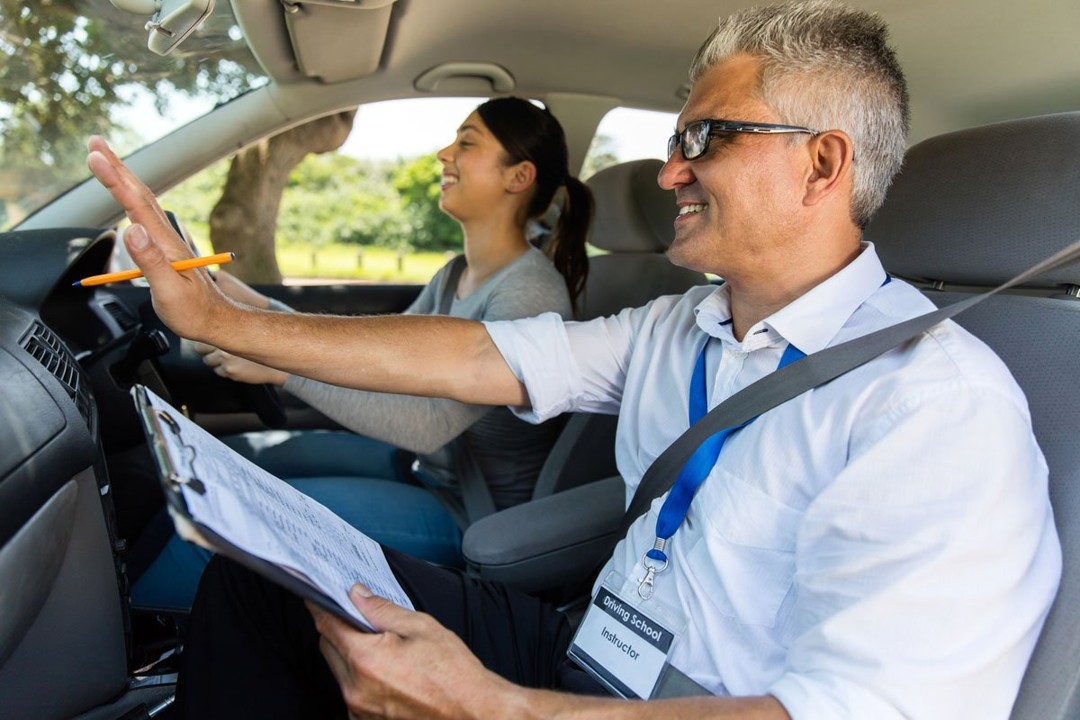
Getting a driver’s license is a significant step on the journey from childhood to becoming an adult. While many things have changed over the years in how we get our driver’s licenses, what hasn’t changed is the need to have an experienced driver guiding the learner in how to drive a car safely. To do that, the driving instructor, whether they are a parent, professional instructor or someone else, tells the learner what to do and what not to do.
The role of the instructor is to prepare the learner driver to be able to drive on their own. Probably none of us would like to have an instructor in the passenger’s seat telling us what to do or what not to do every time we get in our car. When the instructor has taught the learner the skills that are needed to drive well, and the learner has successfully passed their test, then the instructor has done their job and can hand over the privileges and responsibilities of driving a vehicle to the mature and licensed driver.
In this week’s New Testament reading from Galatians 3:23-29, the Apostle Paul describes the role of the law in the life of the Christian. Different English versions use various words to translate the image that Paul uses such as ‘guardian’ (NIV), ‘tutor’ (NKJV), ‘teacher’ (CEV), or even ‘disciplinarian’ (NRSV). The Greek word Paul uses is pedagogue, a term which might be familiar to anyone involved in education. In the ancient world, a pedagogue was a household slave who had the responsibility of making sure that the children of household received their proper education. Eugene Petersen explains this role when he paraphrases this passage:
Until the time when we were mature enough to respond freely in faith to the living God, we were carefully surrounded and protected by the Mosaic law. The law was like those Greek tutors, with which you are familiar, who escort children to school and protect them from danger or distraction, making sure the children will really get to the place they set out for. (Galatians 3:23,24 The Message)
Like a driving instructor prepares a learner to drive a car, the pedagogue was to get the child ready for the full privileges and responsibilities of adulthood. Once the young person was able to assume these privileges and responsibilities, the pedagogue was no longer needed.
There are various ways biblical scholars explain what Paul means by the ‘law’ in this passage. Some think he is referring to the 10 Commandments, while others argue he could mean the whole law of Moses, or the 613 commands of the Jewish religion at the time of Jesus. A broader interpretation is that ‘law’ can mean anything we are expected to do. However we might understand what Paul meant by ‘law’, he is arguing that the role of the law is to guide us into faith which gives us the full privileges of mature children of God.
Like a driving instructor prepares a learner drive to be able to drive on their own, the law prepares us to live well in our relationships with God and with others. It guides us to faith in Jesus who gives us a new relationship with God as his children, and teaches us to love others as he has loved us. When we learn to trust God and his love for us in Jesus, and to love others as he has loved us, we reach maturity as God’s children and don’t need the law to tell us what to do all the time. It is still there to guide and help us when we need it, but maturity in faith means we can find freedom in our relationships with God and other people.
This becomes vitally important in the ministry and mission of our congregation and parish, especially with our young people. Sometimes we can think that if we give people a job to do, then they will remain part of the church. If we understand the law as anything we are told to do, then getting people to do things is placing them under the law. Just as Paul tells us that the law is a guardian or pedagogue which guides us into faith, then the goal of our ministry and mission with people of any age, but especially our young people, is not to give them jobs to do, but to guide them into maturity and freedom through faith in Jesus. Just like a driving instructor’s role is to prepare people to drive on their own, our role is to help people find life as God’s children and heirs by trusting in Jesus.
As we listen to Paul’s words in Galatians 3:23-29, one of the best ways to do that is to live in our identity and relationships as God’s children. Paul writes that all who have faith in Jesus are children of God (v26). We have a new identity as God’s dearly loved children through faith in Jesus. As we grow closer in relationship with our loving heavenly Father by trusting in Jesus and all he has done for us, we also grow in our understanding of who we are as his children whom he loves and with whom he is pleased because we are united with Jesus through baptism (Matthew 3:16,17; Mark 1:9-11; Luke 3:21,22). One important way we can help younger people remain connected with the church is by helping them find a new and healthy sense of their identity as God’s dearly loved children through faith in Jesus.
This faith also shapes our relationships with others. Paul continues, ‘there is no longer Jew or Gentile, slave or free, male and female. For you are all one in Christ Jesus’ (v28 NLT). When we see others as God’s dearly loved children, especially people who are different from us, the barriers between us disappear. God welcomes all people into his family and gives us all equal status as his children and heirs through faith in Jesus. When we live in the unity the Spirit gives, recognising others as people whom God loves, embraces and cherishes equally, then the distinctions and barriers the world sets up between us are torn down and we can live together as the family of God and the living body of Christ. This gives us a better way to think about our ministry and mission with others. When we give people who are different to us as equal status, value and importance because Jesus gave his life for them too, we give them a sense of belonging, value and significance in community with us. When we give others a strong sense of who they are in Christ and a place to belong with us in the family of God, we offer them a powerful experience of God’s life-changing grace for us all in Jesus.
Those of us who drive needed someone to tell us what to do and what not to do when we were learning. However, the goal was to prepare us to drive on our own. Paul tells us that the role of the law was to guide us into faith in Jesus. This faith gives us a strong sense of who we are and the unity we have as God’s children, even with all our differences. When we are living together as one through faith in Jesus, we can help guide others into the faith that helps them find who they are and where they belong as God’s dearly loved children with us.
More to think about or discuss:
- How did you learn to drive? Have you tried teaching someone else to drive? Was it a positive experience for you? You might like to share some reasons why…
- What do you think about Paul’s words that the law was our pedagogue or guardian until Christ came? How does faith free us from needing someone to tell us what to do?
- How does seeing yourself as a child of God through faith help with your sense of your identity? How might living in the unity that comes through faith in Jesus help us show grace to others?
 Pastor Eugene Online
Leave a comment