As we move towards Christmas, we might be hearing a lot of Christmas songs and carols. They can be ancient carols through to modern songs, sung by choirs, rock bands or vocalists in a wide variety of musical styles.
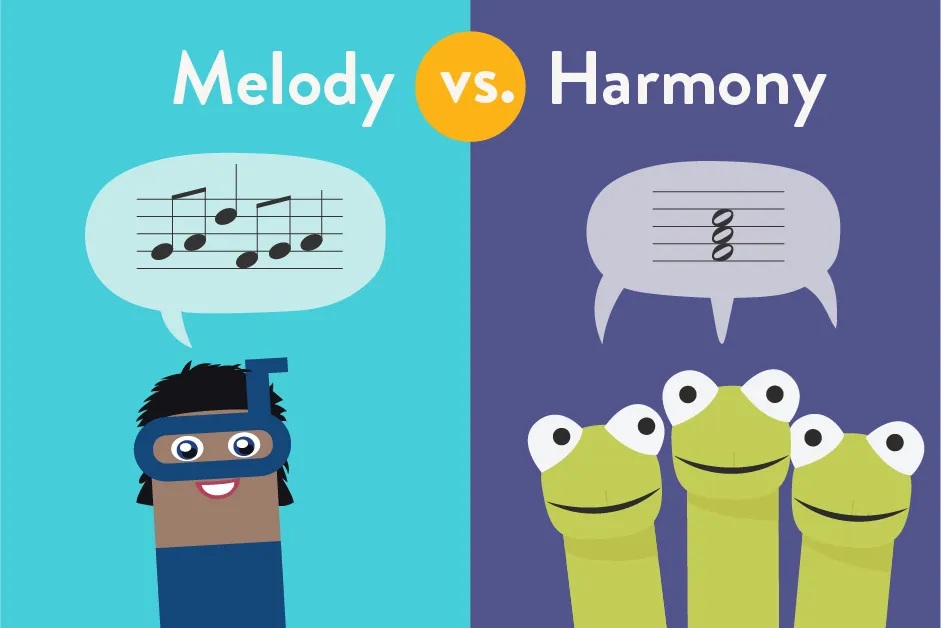
One musical group with a pretty large following that performs Christmas music is called Pentatonix. Pentatonix perform their music without instruments. Instead, they present their music with only their voices in a style known as a cappella. Each voice sings a different melody, often with a different rhythm, to provide a full and complex sound. While each of the five people in the group sings different words, melodies and rhythms, they are all in harmony with each other and combine to offer a richer and more layered sound than if one of them was singing on their own, or if they were all singing in unison with each other. For an example of a cappella music, you might like to listen to Pentatonix perform the Carol of the Bells. As you listen to the song, listen for the five distinct voices, the differences in what they are singing, as well as how they all combine to provide a beautiful rendition of this Christmas carol…
When the Apostle Paul wrote to the early Christian community in Rome, he prayed that God would provide them with patience and encouragement to help them ‘live in complete harmony with each other, as is fitting for followers of Christ Jesus’ (Romans 15:5 NLT). Paul’s hope for the Christians in Rome was that their lives together as God’s people would combine to provide a rich and beautiful harmony with each other to sing the praises of their Creator and Redeemer like an a cappella singing group. Paul’s hop was for the members of this Christian community could ‘join together with one voice, giving praise and glory to God, the Father of our Lord Jesus Christ’ (v6 NLT) as they lived in harmony together.
Paul knew that living in harmony with others is an essential element of the Christian community’s witness to the unbelievers around them. This harmony didn’t mean that they all looked the same, acted the same or even were the same. Instead, like an a cappella singing group, harmony was created when people came together with all their differences and combined those differences around the same central theme to complement each other. Like an a cappella group singing different parts on the same song sheet, Paul urged the Roman Christians to sing in their different ways, all drawing from the same grace they had received in Jesus, so that a rich and layered version of the Christian faith could be seen and heard by the people around them as they lived in harmony with each other.
In our own time and place, Paul’s words challenge us to ask how well do we live in harmony with each other and other Christians around us? We live in a time where the world encourages us to do our own thing. In an a cappella group, if each member does their own thing, the beautiful harmonies are lost and the sound becomes a cacophony. For an a cappella group to be in harmony with each other, the different people need to be listening to each other and singing their individual parts with others, even though these parts are all different. Harmony in the church works basically the same way. Instead of us all working independently of each other, harmony comes when we are listening to each other, singing our individual parts with each other, and all contributing to the greater purpose of joining together ‘with one voice, giving praise and glory to God, the Father of our Lord Jesus Christ’ (v6 NLT), who has given everything for us and to us, to unite us with himself and with each other as the loved, redeemed and renewed people of God.
God wants to see and hear this harmony between his people in every level of the church. It begins with us as individuals living in harmony with each other. This brings harmony to us as a congregation, a parish, as a region and further through the church as we live in harmony with each other with all our differences. The goal is that our lives and our church become a beautiful and harmonious song of praise to our God. Too often our relationships in the church can become a cacophony, which literally means a harsh or unpleasant sound, as we prefer to do our own thing. Instead, an vital purpose of Christian community, whether as a congregation, parish or broader, is to live in harmony with each other, embracing each other as we are, while we combine our differences, so our lives can be a magnificent song of praise to our Creator and Saviour.
Like an a cappella group, it begins by singing from the same piece of music. For us as God’s people and disciples of Jesus, the music we are singing in our own unique but harmonious ways, is the gospel of Jesus: the good news of God’s infinite and life-giving love for us in the birth, life, death and resurrection of his Son. Paul illustrates what this harmony looks like in verse seven when he writes, ‘accept each other just as Christ has accepted you so that God will be given the glory’ (NLT). We glorify God and sing his praises in harmony with him and each other when we accept and embrace others with all our flaws, peculiarities and weaknesses, just like God accepted each of us with all our flaws, peculiarities and weaknesses for the sake of Jesus. Harmony in the church is seen when we show the same grace to others that we find through faith in Jesus, when we forgive each other in the same way that God has forgiven us for Jesus’ sake, when we have the same compassion on others that God has on us, and when we love one another with the same self-sacrificing love that God has loved us through his Son. When we sing from the same song sheet of the gospel, we won’t always be singing the same melody, but we can listen to God and to each other, combining our different melodies to provide a rich complex and beautiful harmony that sings praise to God for the new life he has given us in Jesus.
Maybe one of the reasons why our church generally has struggled with an effective witness to the world around us is because we have embraced the world’s song of ‘everyone do your own thing’. Like a band or an a cappella group where everyone’s playing their own song, this ends up sounding like a cacophony, a harsh and unpleasant sound, to God and to the people around us. When we are in harmony with each other as individuals, congregations, parish, region or wider, with our lives singing the goodness and grace of God through Jesus in different but complementary melodies or rhythms, we can praise God and give a powerful witness to his love through a rich, layered and beautiful song.
More to think about or discuss:
- What is your favourite Christmas carol or song? is it usually sung in unison or harmony? What sounds better: when people sing in unison or harmony? Why do you think that?
- How does God bring different people into harmony with himself & others through the gospel? How can accepting others (v7) help lead us to greater harmony with others?
- What is one thing you can do to help live in greater harmony in our relationships? In our congregation? In our parish…?
 Pastor Eugene Online
Leave a comment