Over the last few weeks during the season of Lent, we have been listening to God’s Word for his grace to us in Jesus.
We began on Transfiguration Sunday, the Sunday before Lent started, as we heard God’s voice from the cloud instruct Jesus’ followers, including us, to listen to Jesus (Matthew 17:1-9). On the first Sunday in Lent, we heard that God’s grace in Jesus’ sacrifice for us covers us with his goodness and righteousness like God covered Adam and Eve with animal skins when they were naked and ashamed (Genesis 3:1-7). The following week we listened to the apostle Paul teach us that grace isn’t something we earn by trying to do good things, but a gift God gives us freely (Romans 4:1-5). In the third Sunday of Lent, we heard how God knows everything we’ve ever done and still gives us his welcome, acceptance, value and love through his grace for us in Jesus, just like he did for the Samaritan woman at the well in John 4:5-42. Last week, we listened to Paul tell us that we were once darkness but now are the light of God, called to live as children of light, participating in God’s outward movement of grace for all people in Jesus (Ephesians 5:8-14).
The word of God we’ve been listening to this week is the story of Jesus raising Lazarus from the dead in John 11:1-45. It’s an amazing story with many expressions of God’s grace for the people in the story, as well as for us.
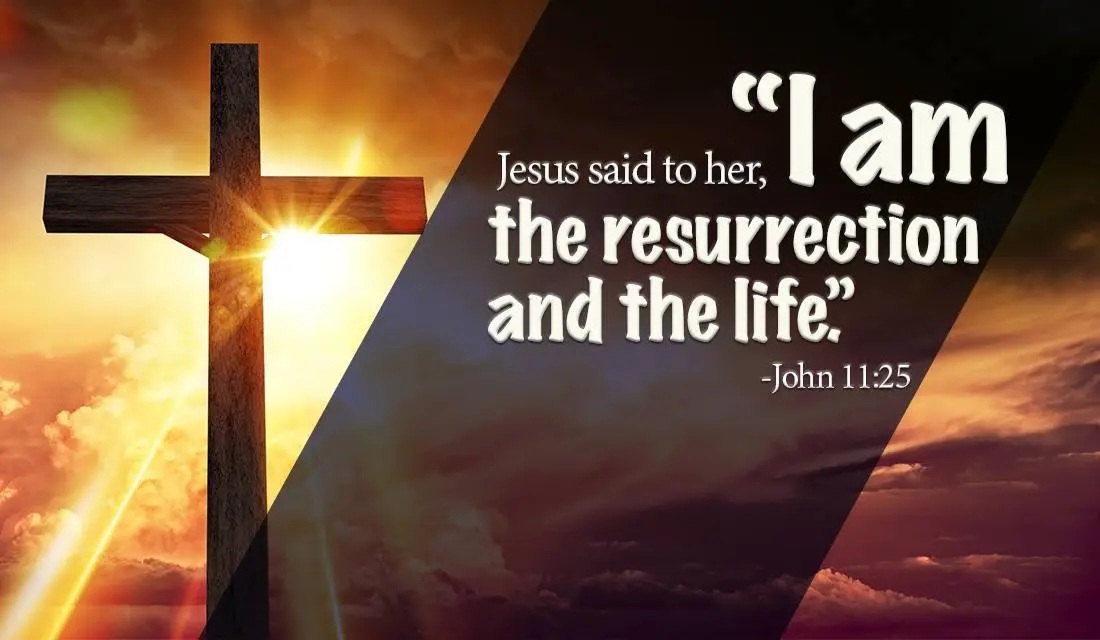
One part of the story in which we can hear God’s grace is after Jesus arrived at Bethany, the village where his good friends Mary, Martha and the recently deceased Lazarus had their home. Martha came out to Jesus and said that if Jesus had been there, her brother would not have died. She continued by saying that she believed that God would give Jesus whatever he asked. Jesus replied that her brother will rise again. Martha thought that Jesus was talking about the resurrection on the last day, but then Jesus said to her,
“I am the resurrection and the life. Anyone who believes in me will live, even after dying. Everyone who lives in me and believes in me will never die.” (v25,26 NLT)
Like Martha, we can listen to Jesus’ words and believe that he is talking about the resurrection of the dead at the end of time. One of the basic Christian beliefs is that Jesus will return at the end of this age and he will raise those who have died in faith in him to everlasting life (see John 6:39,40; 1 Corinthians 6:14, 15:12-23; 2 Corinthians 4:14). Like Martha, we can trust that Jesus will raise us from the dead to eternal life on the last day.
However, when we listen carefully to his words, we can hear Jesus talking about more than the resurrection on the last day. When Jesus said that he is “the resurrection and the life” he was also talking about his authority to raise us to everlasting life beginning here and now. While Martha was hoping that Jesus would raise her brother to new life on the last day, Jesus went on in this story to raise Lazarus right there and then. That says to us that Jesus came to give us new life, not just in the world to come, but also in this world. In telling us that he is “the resurrection and the life” Jesus is pointing us towards a literal, physical resurrection on the last day as well as a spiritual resurrection to new life here and now.
We can see God’s word pointing us to this new life which begins here and now in various places. In John 10:10 Jesus said that he came to give us “a rich and satisfying life” (NLT) or life “to the full” (NIV). In Romans 6:4 Paul tells us that through baptism we have been raised with Jesus to live a new life. Paul echoes these words in Colossians 2:12 when he writes that through baptism and faith in him, God has raised us to new life with Jesus. In Colossians 3:1, Paul also writes, “Since you have been raised to new life with Christ, set your sights on the realities of heaven” (NLT). In all of these verses of Scripture, God’s word tells us that while we can look forward to a physical resurrection of the dead on the last day, his grace to us in Jesus also gives us a spiritual resurrection to new life here and now through faith in him. Just like Mary and Martha didn’t have to wait until the last day to see the resurrection of their brother, we don’t have to wait until Jesus returns to be part of his resurrection life. The grace of God to us in Jesus gives us new life right here and now.
The tomb in which Lazarus was placed can be seen as a metaphor for life in this world which is dominated and controlled by sin. The darkness corresponds with the darkness we can encounter and the dark times we can go through in so many different ways which leave us without hope or joy. Lazarus was isolated and alone in the same way that sin separates us from God and from other people, which can also leave us alienated, isolated and alone. The grave clothes that were wrapped around Lazarus can represent those things in life that bind us or tie us up, restricting our freedom, preventing us from reaching out to others in compassion and kindness, and stopping us from loving others the way Jesus has loved us. When Jesus called Lazarus out from the tomb, he was calling him out of the darkness of sin into the light of new life in God’s grace. Jesus restored his joy and hope in the new life he gave him. Jesus reunited Lazarus in his relationship with his sisters and all who were mourning his death. Jesus freed him from the grave clothes which bound him so he could move freely, using his liberated hands and feet to walk in ways that were good, to do good for others, and to bless others through the new life he had been given. In the same way, when Jesus calls us to new life through faith in him, he brings us out of the darkness we can experience into the light of his grace and love for us. He restores us in our relationships with God and with others. Jesus releases us from those things that bind us or tie us up so we can find freedom in him and use what he has given us to serve, love, bless and help the people around us as continued expressions of God’s outward movement of grace through us.
We can all be like Lazarus when we experience darkness and isolation because of sin, and as it ties us up and binds us in so many different ways. In the story of the raising of Lazarus, we can hear God’s life-giving grace to us in Jesus. The One who is the resurrection and the life calls us from darkness, isolation and bondage into the light of new life, restored relationships, and freedom to live as God’s dearly loved children. God’s grace for us in Jesus raises us to new life. We will fully experience this life when Jesus raises us on the last day. Until then, we can live each day in the light of God’s life-giving grace to us in Jesus.
More to think about or discuss:
- Where do you hear God’s grace for us through Jesus in the story of the raising of Lazarus? How is that good news for you?
- Do you think of our resurrection in Jesus more as something that will happen when Jesus returns on the last day or something he gives us now? Why do you think that way? How might you see your life different if Jesus’ resurrection life begins in us here & now?
- What do you think Lazarus might have done with his life after Jesus raised him from the dead? How might God’s life-giving grace for us in Jesus shape the way you live your life?
 Pastor Eugene Online
Leave a comment