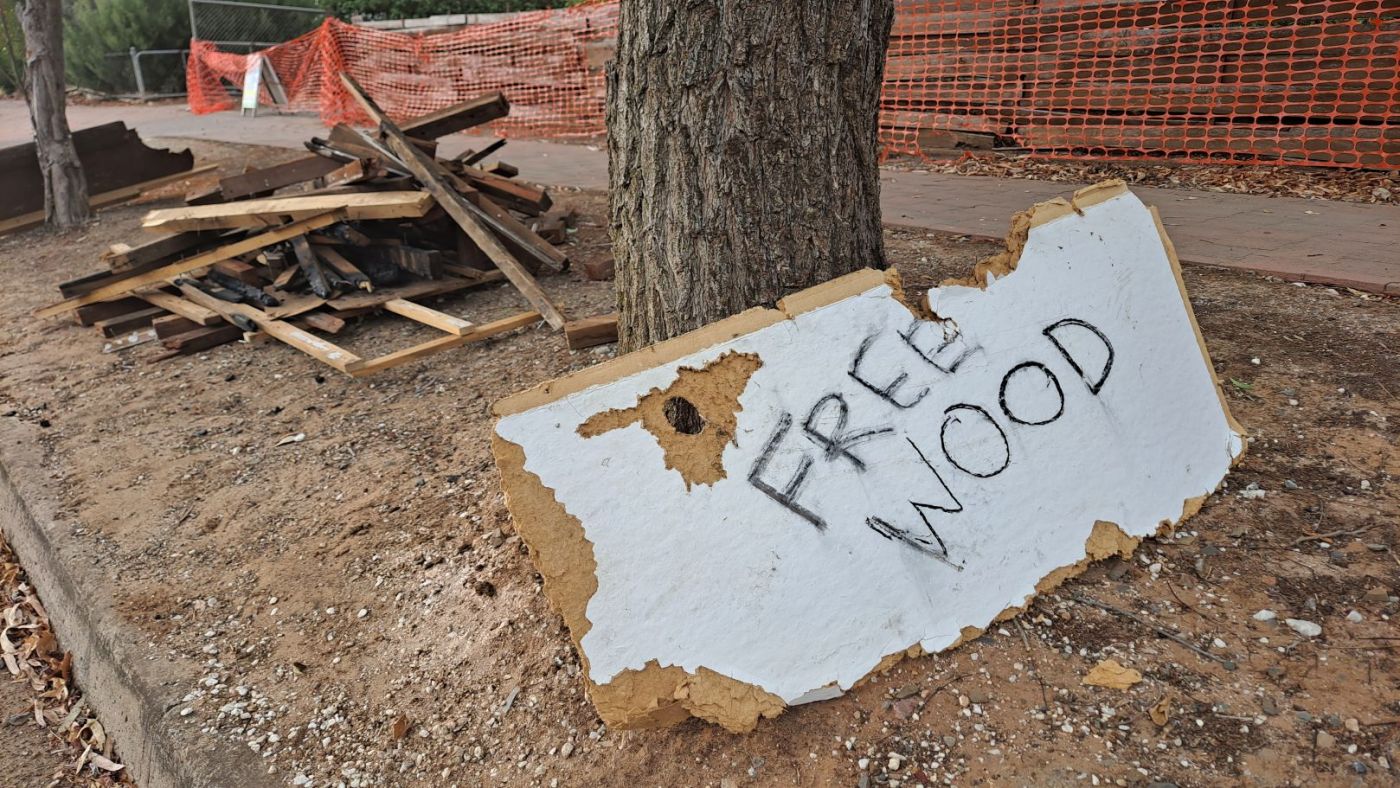
If you were driving in or out of Greenock along the Nuriootpa Road earlier this week you might have seen a sign next a pile of timber saying, “Free Wood.” They are demolishing a house and some of the wood from the house was on the side of the road to be taken away.
What do you think the people who took the wood will do with it? Maybe they will cut it up and burn it as firewood. Do you think it might be possible, however, that someone rescued the timber to repurpose it in a more creative way? It would probably take a lot of care and skill, but can you imagine someone saving the wood from the rubbish pile or fire and giving it a new purpose by crafting it into something useful or even beautiful?
One way to explain the foundation of the Christian faith is that ‘we are saved by grace through faith for Christ’s sake.’ This has been central especially to the Lutheran faith since the Reformation 500 years ago. These words come from Paul in this week’s New Testament reading, Ephesians 2:1-10. One way we can think about being ‘saved’ is that God has rescued us through the life, death and resurrection of Jesus. Paul describes what our lives used to be like when he writes that ‘once (we) were dead because of (our) disobedience and (our) many sins’ (v1 NLT). This might sound harsh to modern ears, but from God’s point of view, that was who we were. As people who carry sin in us like a virus, we were like the wood on the side of the road. Sin made us damaged, broken, discarded and useless.
In Christ Jesus, however, everything has changed. Paul writes that ‘God is so rich in mercy, and he loved us so much, that even though we were dead because of our sins, he gave us life when he raised Christ from the dead’ (v4,5 NLT).
This is sort of like God driving along the Nuri road, saw the pile of old, discarded and broken wood on the side of the road, and instead of looking the other way and driving past it, he stopped, saw value in it, told his Son to load it into the back of their ute, and took it home. God sees value in every person so he sent Jesus to rescue us from the rubbish pile and gather us into his heavenly Kingdom. The word the New Testament uses for ‘saved’ can also mean ‘rescued’ or ‘restored’. We can think about salvation, then, as Jesus rescuing us from the rubbish pile of sin and death, and bringing us home into the Kingdom of God.
Sometimes Christians focus on Ephesians 2:8, celebrate that we are saved by grace through faith for Christ’s sake, and leave it at that. However, Paul doesn’t leave us there. In verse 9 he tells us that God rescued us as an act of grace, not because of the things we have done. To continue our story about the wood on the side of the road, God doesn’t rescue us from the rubbish pile because we have done anything special to earn a place in the back of his ute. God rescues us from the rubbish because he loves us and values us just as we are.
The next verse is crucial to help us understand why that’s significant. We might be rescued from the rubbish pile of sin and death, but how does that make a difference in our lives?
Paul answers by writing, ‘For we are God’s masterpiece. He has created us anew in Christ Jesus, so we can do the good things he planned for us long ago’ (v10 NLT).
Imagine someone picked up the wood on the side of the Nuri road and, instead of burning it to keep their home warm in winter, they took it to their workshop and repurposed it by making something new out of it. What do you reckon they might make: a box, a lamp stand, turn it on the lathe into a bowl, or something else? Paul is saying that God rescued us for a reason. He saved us from the rubbish pile of death and sin to make something new out of us, to repurpose us, and to give our lives new meaning.
There are a few different ways that English translations describe the result of God’s saving work in our lives. For example, the New International Version describes us as God’s ‘handiwork’. This can give us the impression that God is handcrafting each of us into the people he always intended us to be. The New King James Version uses the word ‘workmanship’ which can make us think about God, in his work shed, fashioning us into something beautiful and functional. The New Living Translation calls us God’s ‘masterpiece’. This can make us think of an artist who works carefully to create something that will hang in one of the world’s most prestigious art museums for everyone to admire and enjoy. Whichever translation we prefer, God is working on us, making us into the people he always intended us to be: people who are good, whole, and beautiful, just like he always intended.
As people who are created new in Christ (2 Corinthians 5:17), God gives our lives a new purpose. He doesn’t leave his masterpieces on the shelf or in an art museum to be admired from a distance. Paul writes that our purpose is to ‘do the good things he planned for us long ago’ (v10 NLT). When we look at the state of the world we live in, we can probably see a lot that is wrong, bad, or broken. God’s purpose for us is not to point out the bad, criticise the wrong, or wish we could get back to how things used to be. Instead, God has set up a whole lot of things for us to do so we can bring his goodness into the world. The best way for the world to be a better place for our children and grandchildren is to partner with God in his mission to rescue and restore the world, beginning with us. As we encounter the goodness of God who rescues us and restores us as the people he always intended us to be through the grace of Jesus, he also gives us a new purpose in life. We can find a deep and enduring meaning in life by joining with God to make the wrong things we encounter right again, to bring good into bad situations, to bring healing to what has been broken, and work for peace where there is conflict. When we overcome evil with good (Romans 12:21) we live in the victory over evil that Jesus won in his crucifixion and resurrection, and we join with God in his ultimate mission in making all things new again in Christ (Revelation 21:5).
The free wood on the side of the road to Nuriootpa is gone now. Do you think it will be thrown into the fire? Or did someone rescue it, create something new with it, and repurpose it in some way? The next time you see a pile of hard rubbish on the side of the road, you might like to think about how God rescues us from the rubbish pile of sin through the suffering, death, and resurrection of Jesus. In his creative power, God handcrafts us into masterpieces through faith in Jesus, and gives us new purpose in our lives, to do the good he planned long ago for us to do. When we do this, we join him in his mission to make all things new through Christ. What might he have planned for us to do this week…?
More to think about or discuss:
- Have you or someone you know ever found something valuable in hard rubbish or household goods left on the side of the road? What was it? What did you do with it?
- What does being ‘saved’ mean to you? How might being ‘rescued’ or ‘restored’ give you a broader understanding of God’s salvation?
- Where do you find meaning and purpose in life? How might that be different if you thought about your purpose as doing the good God has already planned for you to do?
 Pastor Eugene Online
Leave a comment