Earlier this year people from our congregation at Gnadenfrei partnered with others along Seppeltsfield Road to be part of Clean Up Australia Day. Teams of people spent a Sunday afternoon walking along the roads around Marananga picking up rubbish that they found lying on the side of the road and disposing of it.
How much rubbish do you think could have been collected if just one person participated? Or if two people were picking up rubbish that day, how much do you think they would be able to clean up? If the whole community was out there, walking along the roads and collecting the rubbish they found, how much more would they be able to clean up?
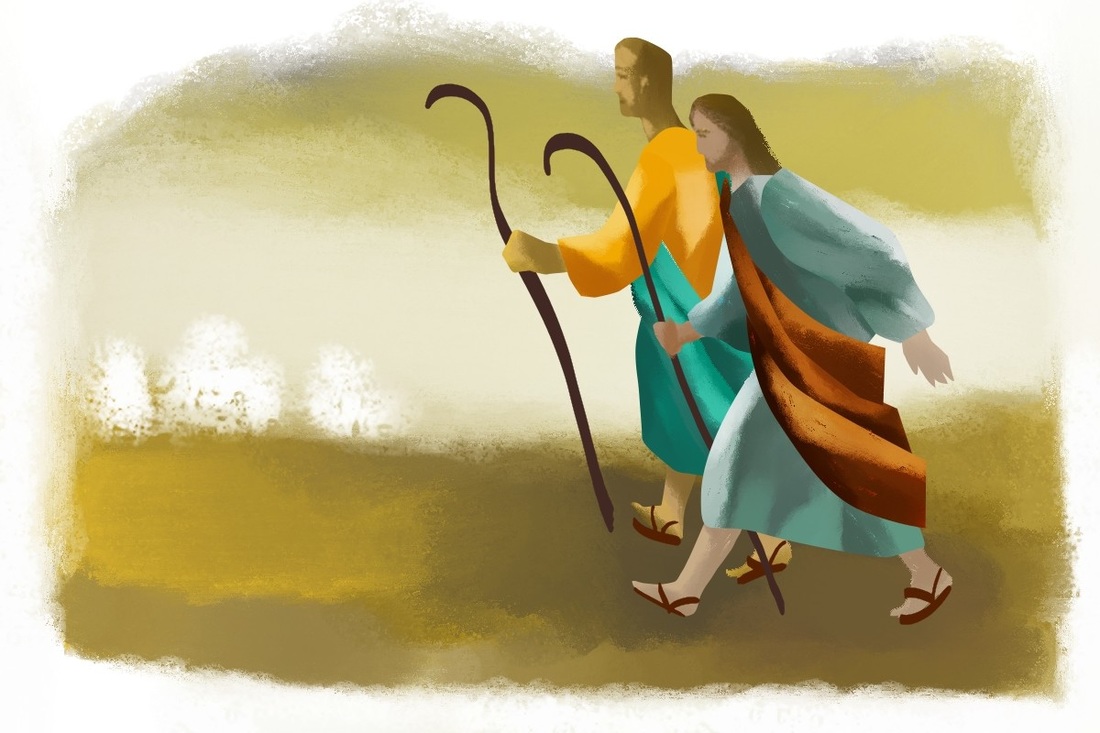
It makes sense that the more people we have involved in something like Clean Up Australia Day, the more ground we can cover and the more good we can do. This is the idea behind Jesus’ actions in the reading from Mark 6:1-13. At the start of the reading, we hear of Jesus being rejected by the people of his hometown of Nazareth. This would be pretty discouraging for most people. However, after his rejection Jesus doesn’t retreat from the mission he believes he is called to. Instead, he sends his 12 Disciples out in pairs to the surrounding villages with the authority to do his work in those towns.
There are a couple of ways we can understand Jesus’ actions. Firstly, he knows that if the work of God’s Kingdom is only left up to him, his reach will always be limited. Like picking up rubbish on Clean Up Australia Day, if only one person is doing all the work, the good that person can do will be much less than if more people are involved. Jesus recognises this so sends out his Twelve Disciples to cover more territory and bring the good news of God’s Kingdom to more people. Luke’s gospel follows up this story (Luke 9:1-6) with another in the next chapter in which Jesus sends out seventy-two of his followers (10:1-24). These stories show us that Jesus knew that if proclaiming the good news of God’s Kingdom in words and actions were left solely up to him, he would only reach a limited number of people. By sending more of his followers out with the good news, they were able to cover much more territory & many more people could hear the good news and come to faith.
Another reason Jesus authorised his disciples and sent them out was he knew that he wouldn’t always be with them. Jesus understood that the time would come when he would ascend into heaven and leave his disciples to continue his work without his guidance and direction. While they would receive the Holy Spirit as their helper, Jesus saw his time with his followers in person as the time to train them in the work of his Kingdom so they could continue without him. Jesus trained them by teaching them, sending them out with his authority to do his work, and then teaching them more when they returned. This was an on-the-job apprenticeship for Jesus’ disciples. They learned about the Kingdom, went out to put it into practice, then returned to learn more before they were sent out on their own with the help of the Holy Spirit.
Jesus sending out the Twelve Disciples is an important lesson for is to learn as his disciples in our time and place. Often we can leave the work of God’s Kingdom to only a few people, usually our paid pastor or one or two volunteers who give their time and effort to the work of the church. Like only a few people helping on Clean Up Australia Day, a limited amount of good is done, but nothing close to what is possible when more people or even a whole community roll up their sleeves and work together for a common purpose. When that purpose is the Kingdom of God and the peace, hope and love which faith in the Gospel of Jesus gives, then more good can be done in people’s lives than we can imagine. Whenever we forgive people for the wrongs they have done, love others in the way that Jesus has loved us, or extend God’s unconditional grace to others in the same way that he has shown us grace in Jesus, we are doing the work of God’s Kingdom and bringing his goodness into their lives. We might not have the gifts to drive out demons or perform miraculous healings the way the Twelve Disciples did when Jesus sent them out, but when we give even a glass of water to someone as an act of faith and love, we are doing the work of God’s Kingdom and sharing in his ministry to the world.
The idea of being in ministry can be intimidating for some people. We might think that it is only for experts with theological degrees or worry that we might get something wrong. Jesus sends us as his disciples into our homes, towns and regions with his authority. For followers of Jesus, this authority means that he authorizes us to act on his behalf. Authority in the Bible isn’t about power or control over other people, or telling others what to do. When Jesus sent out the Twelve Disciples, he authorised them to represent him in all they said and did. When Jesus left his disciples at the end of Matthew’s gospel, he said that all authority had been given to him and he sent them out as his authorised representatives to continue the work of his Kingdom of grace and freedom. Two thousand years later, he gives that same authority to us as he authorises us to speak his words of grace, love and peace to others as though he is speaking through us, to do the good he intends in the world through us, and to represent him to the people around us in all our words and actions.
As we drive around the Barossa, we can see a lot of rubbish at the side of the road. Times like Clean Up Australia Day challenge us to think about whether we are happy with that or if we want a cleaner Barossa. If we hope for a cleaner Barossa, will we expect one or two people to do the job? Or are we prepared to work together for that purpose?
Jesus authorised his disciples and sent them into the neighbouring villages to do the work of God’s Kingdom. When we look at the world in which we live, there are a lot of things that aren’t the way God intends them to be. God’s plan is to make all things new through the good news of his coming Kingdom. Will we leave it to one or two people to do that work? If we all participate, if we all contribute, the goodness of God and the grace of his Kingdom will reach a greater area and many more people as Jesus authorises us and sends us into the world around us to bring his saving love to others in all we say and do.
More to think about or discuss:
- Would you prefer to take on a big task by yourself or with a group of others? Can you explain why you prefer to do it that way?
- How do you think the Twelve Disciples might have felt when Jesus sent them out with his authority to do the work of God’s Kingdom? Why do you think they might have felt that way?
- Where can you see the need for God’s Kingdom of grace and love in your life or in the lives of the people around you? What might prevent you from being Jesus’ authorised representative in that situation? How can our faith community help to equip you to be Jesus’ authorised representative in that?


Leave a Reply