In our Bible readings over the last couple of weeks, we have been hearing Jesus promise his disciples to send them the Holy Spirit. Two weeks ago, in John 14:15-21 Jesus told them, “I will ask the Father, and he will give you another Advocate, who will never leave you. He is the Holy Spirit, who leads into all truth” (v16,17a NLT). In last Sunday’s Ascension stories, Jesus said, “And now I will send the Holy Spirit, just as my Father promised” (Luke 24:49 NLT) and “in just a few days you will be baptized with the Holy Spirit” (Acts 1:5 NLT).
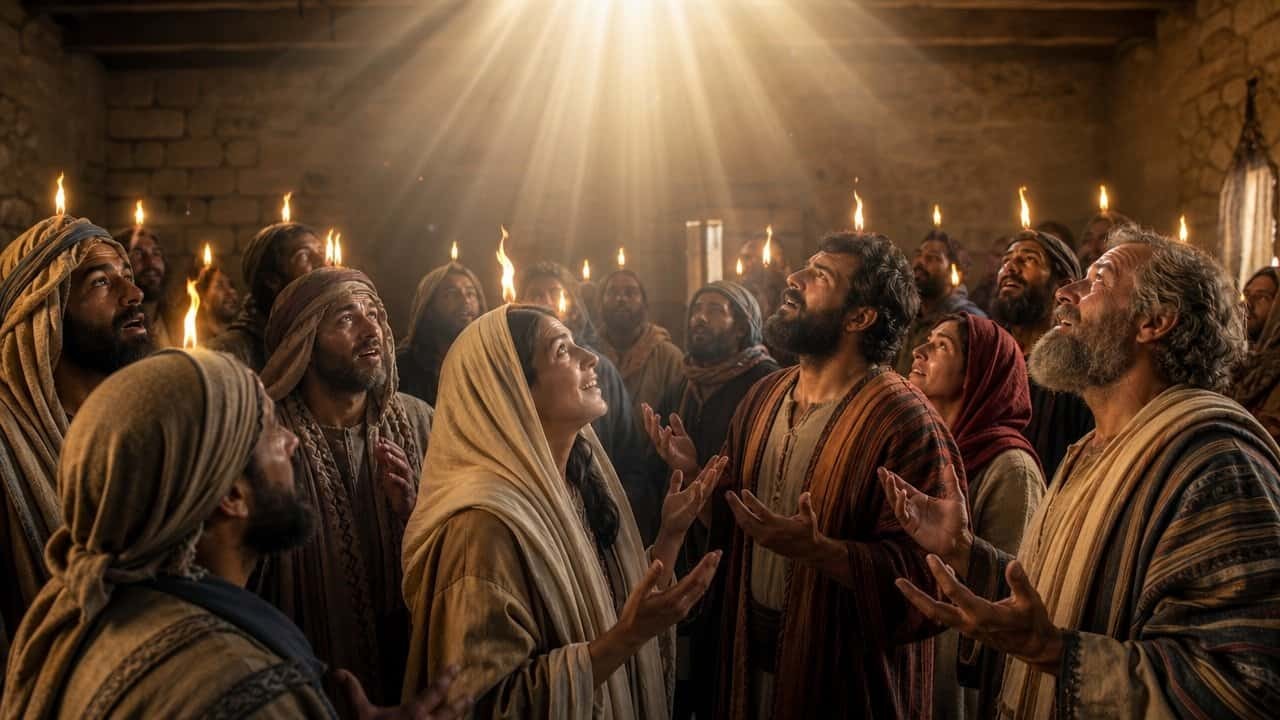
On the day of Pentecost, fifty days after Jesus’ resurrection from the dead and ten days after he ascended into heaven, Jesus kept his promise and the Holy Spirit descended on his disciples. As we hear in Acts 2:1-21, all the believers were in one place when they heard the sound of a mighty rushing wind fill the place where they were. They saw what looked like tongues of fire settle on each person’s heads, and they began speaking in other languages. The noise drew a crowd who were amazed that they could hear Jesus’ disciples speaking to them in their own native languages. In response, Peter stood up and told them the good news of Jesus’ death and resurrection. After “preaching for a long time” (v40 NLT), about 3,000 people believed the good news and were baptized into the body of Christ.
One detail in this story that has generated a lot of discussion over the years is what Luke, the author of the book of Acts, meant when he said that Jesus’ followers “began speaking in other languages, as the Holy Spirit gave them this ability” (v4 NLT). Some English translations such as the New International Version and the English Standard Version use the word “tongues” instead of “languages”. This is the same word as the “tongues of fire” which appeared on the heads of the disciples in verse 3. This is also the same word Paul uses in 1 Corinthians 13:1 when he wrote, “If I could speak all the languages of earth and of angels…” (NLT). Again, the NIV and ESV use the word “tongues” instead of languages. This use of the same word in different verses has led some to ask if the “tongues” the disciples spoke on the day of Pentecost were earthly languages, or if the Holy Spirit gave them the ability to speak in the languages of heaven. Was the Holy Spirit giving the disciples the miraculous ability to speak in earthly languages they had never learned? Or is this the first example of the charismatic gift of speaking in tongues as evidence of receiving the Holy Spirit?
In 1 Corinthians, Paul writes that speaking in the languages of angels, which is often referred to as “speaking in tongues”, is a gift from the Holy Spirit. We have already mentioned the way Paul opens 1 Corinthians 13 by referring to “the languages of earth and of angels.” In chapter 14 he writes, “if you have the ability to speak in tongues” (v2 NLT), “A person who speaks in tongues” (v4 NLT), “I wish you could all speak in tongues” (v5 NLT) and “I thank God that I speak in tongues more than any of you” (v18 NLT). When reading 1 Corinthians 14, it appears clear that not only did Paul advocate for the spiritual gift of speaking in tongues, but he practised it himself.
Paul’s point in 1 Corinthians 14 isn’t that every Christian should be able to speak in tongues as evidence of receiving the Holy Spirit, as some claim. Instead, Paul states that the Holy Spirit gives spiritual gifts, including speaking in tongues, to build up and strengthen the church. The Holy Spirit gives these and other gifts for the benefit of others, not just for the benefit of the person who receives them. Paul writes, “Since you are so eager to have the special abilities the Spirit gives, seek those that will strengthen the whole church” (14:12 NLT). Again he writes, “in a church meeting, I would rather speak five understandable words to help others than ten thousand words in an unknown language” (v19 NLT). Paul’s priority is that the gifts the Holy Spirit gives to God’s people are used to encourage and build up God’s people and the community of believers, in faith, hope and Christ-like love.
We can see this happening in the Pentecost story. The Holy Spirit gave the disciples the ability to speak in different “tongues” so that the people in Jerusalem from around the known world could hear the good news of Jesus in their own languages. They said, “These people are all from Galilee, and yet we hear them speaking in our own native languages!” (vv8b,9 NLT). Just like Paul said the gifts of the Spirit are to strengthen and build others up, so the gift of the Holy Spirit at Pentecost was so that people from various countries could hear the gospel in their own language, believe in Jesus and be saved.
Understanding the “speaking in tongues” in Acts 2 as the disciples speaking earthly languages can encourage us in our witness to the people around us. We can all find it hard to share our faith with others sometimes. The Pentecost story is about the Holy Spirit giving ordinary people who were afraid and confused the power and the words to share the gospel with others. Through the Holy Spirit’s gift to the disciples, people heard the good news of Jesus in language they could understand. This resulted in many of them coming to faith and being saved. The Holy Spirit can and will do the same for us. The Holy Spirit gives all of us different gifts so we can serve, love, help and bless each other. Some of these gifts might be spectacular, supernatural gifts like speaking in tongues or performing miraculous healings. Others might be more ordinary like extending hospitality, speaking an encouraging word, or working with our hands. The Holy Spirit has gifted all of us to build up and strengthen others in faith, hope and love so the body of Christ can grow and mature. When we have the opportunity to tell others about the faith we have in Jesus and his love for us in his life, death and resurrection, the Pentecost story tells us that the Holy Spirit will give us the power to witness to Jesus as we heard in Luke 24:48 and Acts 1:8. The Spirit will also give us the words we need so others can hear the good news, come to faith and be saved.
It might come as a surprise to some that Paul advocates for the spiritual gift of speaking in tongues. As he writes in 1 Corinthians 14, there is a time and place for that gift from the Holy Spirit, just like all the Spirit’s gifts to God’s people. On the day of Pentecost, in the Christian community in ancient Corinth, and in our own church today, God gives us the Holy Spirit to give us the power to witness to Jesus in what we do and in what we say. At Pentecost the Holy Spirit gave Peter and the other disciples the power to stand up and declare their faith in words that the people in Jerusalem could understand, so they could believe and be saved. We can continually ask the Holy Spirit to give us the same power so that, when the time and place are right, we can stand up and tell others about our faith in what Jesus has done for us, so the people around us can also hear, believe and be saved.
More to think about or discuss:
- What do you think of when you hear people talk about “speaking in tongues”? Do you think of that as heavenly or more earthly languages? Why is that?
- Do you find it difficult or easy to tell others about the good news of Jesus? Explain why…
- How can your church or faith community help you trust that the Holy Spirit will give you the words to share the gospel with others? How can you help someone else with that?


Leave a Reply